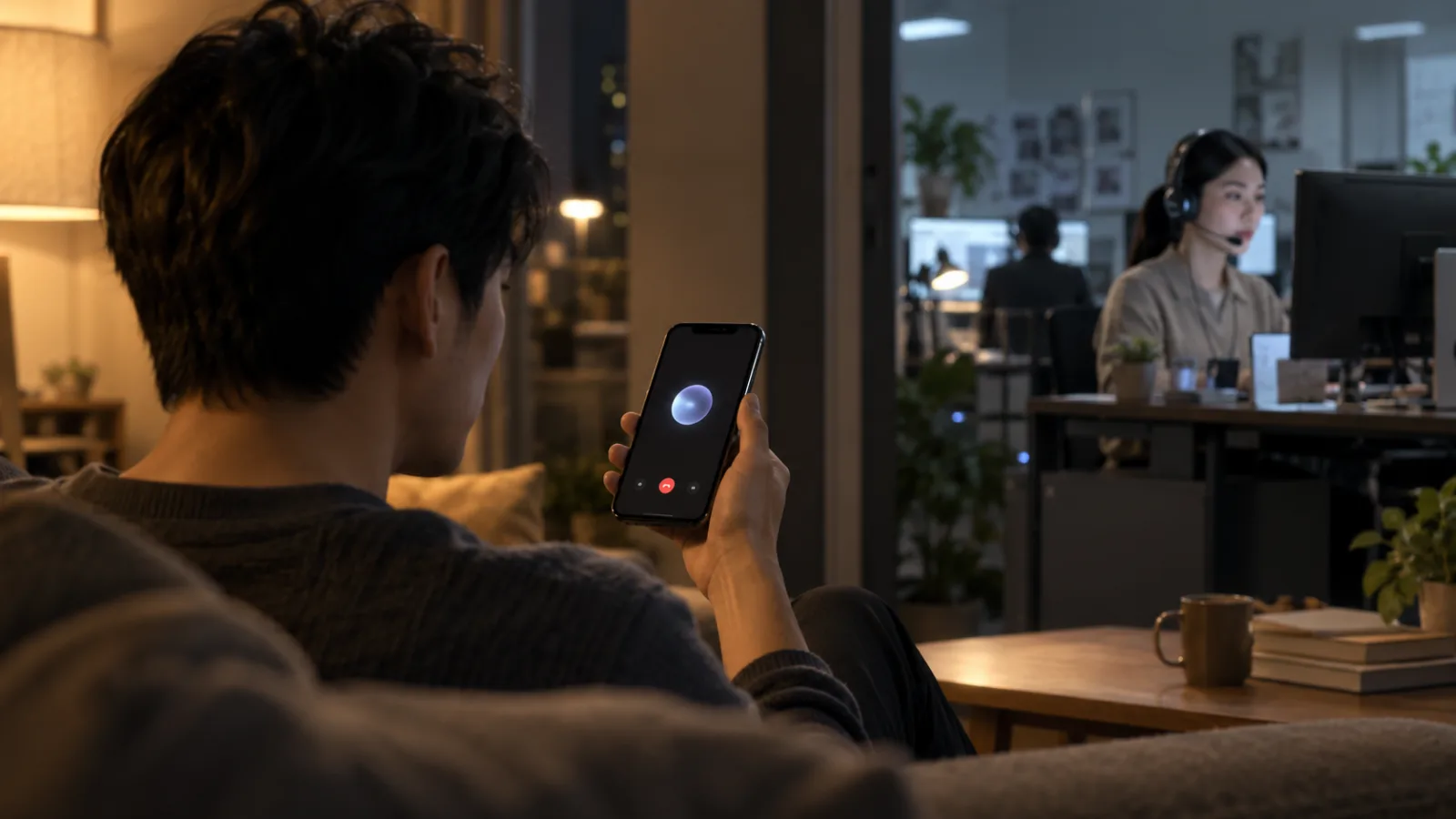
Imagine this.
You're sitting in a very noisy restaurant.
Your friend is talking right across from you.
But at the same time,
two tables nearby are also chatting.
The waiter is clearing plates.
The coffee machine is running.
Someone is moving a chair.
There’s music playing in the distance.
If someone says at this moment:
"Can’t hear clearly? Just turn up all the volume."
You might find
things don’t actually get easier.
Because your friend’s voice gets louder,
but so do the clattering plates.
The chatter from nearby tables also gets louder.
The coffee machine’s noise rises, too.
The real problem is never just about:
how loud the sounds are.
It’s actually about:
when all these sounds come in together, which part do I really need to hear?
This is exactly the problem that the latest generation of AI hearing aids is tackling.
Phonak’s New EON Does More Than Just Amplify Sound
Swiss hearing tech company Sonova launched its new-generation Phonak EON hearing aid platform on August 24, 2026.
Among them, the EON Sphere features Sonova’s third-generation real-time AI hearing technology along with the new HYPERSONIC AI chip.
What’s truly noteworthy
is not that it just has another “AI” label.
It’s what the AI actually does near your ear:
separates speech from background noise in real time.
Sonova explains that Spheric Speech Clarity 3.0 uses retrained deep neural networks to continuously process the surrounding environment as sound enters the hearing aid, extracting speech from noises coming from various directions.
In other words,
The AI doesn’t wait to have a complete recording
and then analyze it slowly.
Instead, as you’re talking with someone,
it works continuously.
But AI Doesn’t “Know Who You Want to Hear”
Here’s an important distinction.
The AI hearing aid isn’t reading your mind.
It doesn’t know:
"This person is your spouse, so they matter more."
Nor does it know:
“The people at that table nearby don’t concern you.”
What it actually does is closer to:
recognizing the sound environment,
distinguishing speech from other noise,
and increasing the clarity of speech compared to background noise.
Phonak’s other system, AutoSense OS AI 8.0,
continuously analyzes your current listening environment
and automatically selects the processing mode best suited to the situation.
So the real advancement is not that:
AI knows what you’re thinking.
But rather:
AI recognizes what’s happening right now much faster.
The Old Problem Was “Unable to Hear”; Now It’s More About “Hard to Understand”
These two things aren’t exactly the same.
If there’s only one person speaking in a room,
turning up the volume might actually help a lot.
But real life isn’t a studio.
The toughest scenarios are usually:
family dinners,
restaurants,
weddings,
meetings,
train stations,
markets,
or situations where several people are talking at once.
In these environments,
you’re not dealing with:
“no sound.”
But rather:
too much sound.
So the real challenge for hearing technology
gradually shifts from:
"amplify sound”
to:
“pull the important sounds out from the others.”
It’s Like Having a Sound Engineer Sitting Next to You All the Time
To put it as simply as possible,
imagine an invisible sound engineer sitting at the restaurant table with you.
Your friend starts talking.
The sound engineer immediately notices:
there’s human speech here.
The clattering of plates nearby
is recognized as background noise.
Someone talks behind you.
The system reanalyzes the scene.
Then the environment changes again,
a waiter walks by,
and people at the next table suddenly laugh loudly.
It adjusts once more.
These decisions aren’t made every five minutes.
Instead, they
happen continuously and rapidly as you go about normal life.
This is why AI fits so well into hearing aids.
Because this kind of work is essentially about:
constantly analyzing lots of sounds,
finding different patterns,
and quickly adjusting.
Sonova Says Users Can Comprehend Complete Sentences More Often
According to Sonova’s published research,
when using the same hearing aid with Spheric Speech Clarity 3.0 enabled,
users have twice the chance of understanding every word in a complex noisy environment coming from different directions compared to when the feature is off.
The company also states that listening effort can be reduced by up to 37%.
These numbers are very attractive,
but it’s important to note:
these are Sonova/Phonak’s own study results.
They show how this technology performs in their tests,
but you can't directly assume that
every hearing-impaired person,
every degree of hearing loss,
every restaurant, or
every sound environment will experience the exact same improvement.
Hearing aids still require adjustments based on individual hearing conditions and real environments.
So, the more accurate statement isn’t:
“AI has solved hearing loss.”
But rather:
AI is improving one of the hardest scenarios for hearing aids: speech in noise.
Why Was This Kind of AI Hard to Put Into Ears Before?
Because AI computation isn’t free.
Deep neural networks analyzing sound continuously require:
processing power,
and battery energy.
If you cram a power-hungry AI into a hearing aid,
the result might be:
excellent sound processing,
but the battery dies quickly.
Or the device becomes too large and uncomfortable.
This is also another notable aspect of the new EON generation.
Sonova says the new HYPERSONIC chip makes Sphere’s AI processing 37% more efficient than the previous generation, allowing EON Sphere to be 25% smaller and 20% lighter while still offering battery life up to about 38 hours.
This reflects a typical AI development direction.
What really brings AI into everyday life
isn’t necessarily a model suddenly being ten times smarter.
Sometimes, what really matters is:
whether the same AI can get smaller, use less power, and be wearable all day long.
This Is the Exact Opposite of Generative AI We Usually See
Every day we talk about ChatGPT, Gemini, Claude,
and it’s easy to form the impression that AI’s value lies in:
generating more text,
more images,
more videos,
answering more questions.
But hearing aids follow a completely different path.
Their most important job isn’t to:
add.
It’s to:
subtract.
Or more accurately:
reduce interference from unimportant signals,
making essential signals easier to hear.
When ten types of sound appear simultaneously in a restaurant,
AI’s value isn’t to create an 11th sound for you.
It’s to help you pick out the one you really need from those original ten.
People Often Don’t Need More Information
This isn’t just a hearing aid issue.
Every day when we open our phones,
we see:
Emails,
LINE messages,
news,
short videos,
notifications,
documents,
meetings,
search results.
AI can generate even more content for us in a few seconds.
So the AI that truly becomes valuable in the future
may not just be:
“What else can I give you?”
but increasingly:
“Among all this, what’s most worth keeping right now?”
The hearing aid makes this problem very concrete.
For someone in a restaurant,
struggling to hear family members clearly,
what they really need isn’t:
more sound.
It’s:
less interference.
And This AI Must Work in Real Time
If ChatGPT takes three seconds to respond,
most times that just means a brief wait.
But real conversations don’t work that way.
If a friend says,
“See you at nine tomorrow,”
and the hearing aid takes three seconds to finish filtering background noise,
that sentence is already gone.
This kind of AI has a very practical requirement:
decisions must be so fast that you barely notice them happening.
This is another major value of Edge AI—placing AI computation directly on the device.
Not sending all sounds to a distant cloud,
waiting for a server to process and send it back to your ear.
Massive sound processing must happen instantly right on the device close to the user.
This is a completely different path from the large data center-based AI we discussed yesterday.
AI is becoming reliant on huge data centers on one hand,
while shrinking into:
phones,
earbuds,
hearing aids,
and other small devices we wear every day,
on the other.
The Real Question Isn't "Does it Have AI?"
In the future, probably every product will have "AI" stamped on it.
The real question is never:
"Does it have AI?"
But rather:
"What difficult problem does AI really solve for the user?"
For hearing aids,
the answer is very concrete.
It’s not about writing articles for you.
It’s not about generating photos.
It’s about, in a noisy world,
helping an important sentence
not get drowned out by other sounds.
Perhaps this is one of the most humanizing uses of AI.
Technology doesn’t always have to add more to the world.
Sometimes,
good technology simply helps someone clearly hear:
what the person right in front of them is saying.
Today, make a little progress with AI.
Learn one AI trick a day.
Save a little time every day.
Improve a little skill every day.
SasaDaily, growing together with you.
Recommended Reading
AI Quick Q&A | 2026/08/02: Does AI Fully Listening and Summarizing Mean It Never Misses Content?