This morning:
We discussed:
The AI boom:
Driving:
Memory.
HBM.
Back into focus as:
One of the most critical bottlenecks
in the entire AI supply chain.
By evening:
A new development emerges,
even more worth following.
Because this time,
the question isn't
"Can the US secure more HBM?"
but rather:
"Should memory chips themselves start being made directly in the US?"
Reuters exclusively reports today:
South Korea’s
SK Hynix
is in talks with
Intel
about a potential collaboration.
If it materializes,
SK Hynix might, for the first time,
manufacture memory chips on US soil.
Currently, two possible scenarios are being discussed
The first is:
SK Hynix leasing part of Intel’s
under-construction wafer fab
in Ohio.
The second possibility:
Establishing a cooperative framework involving
SK Hynix,
Intel,
and a major cloud company aiming
to secure memory supply in advance.
But:
It’s crucial to clarify now.
Nothing has been finalized yet
Reuters cites three sources
familiar with the negotiations.
One source describes the discussions
as still exploratory.
SK Hynix itself told Reuters
the company is indeed exploring
different approaches
to expand its production footprint and
strengthen its memory business competitiveness.
However,
nothing has been decided yet.
So today’s report cannot say:
"SK Hynix has decided to produce HBM in Ohio."
That is not the case yet.
They don’t even know which type of memory might be produced
Reuters adds:
It’s currently unclear
what kind of chip SK Hynix might manufacture
in Ohio if the partnership proceeds.
SK Hynix’s current memory products include:
DRAM,
NAND,
and the hottest AI memory:
HBM.
But for now,
Ohio does not equal HBM production.
This distinction
is very important.
Why is this news still so significant?
Because SK Hynix
has long been moving towards the US market.
In 2024,
it announced an investment of about
$3.87 billion
in an advanced packaging
and R&D facility in West Lafayette, Indiana,
mainly to serve
next-generation HBM
and AI memory.
But the Indiana facility is for "advanced packaging"
Not for:
memory wafer fabrication like today’s Reuters story discusses.
These are very different operations.
To grasp today’s news,
let’s break down HBM.
HBM is not a regular memory chip
It vertically stacks
multiple DRAM dies,
utilizing
very advanced
packaging, interconnections,
and logic/GPU integration
to work together.
The goal is:
to rapidly feed data to the processor
during AI computing.
Thus, the HBM supply chain
has at least two crucial stages.
First: producing the memory dies
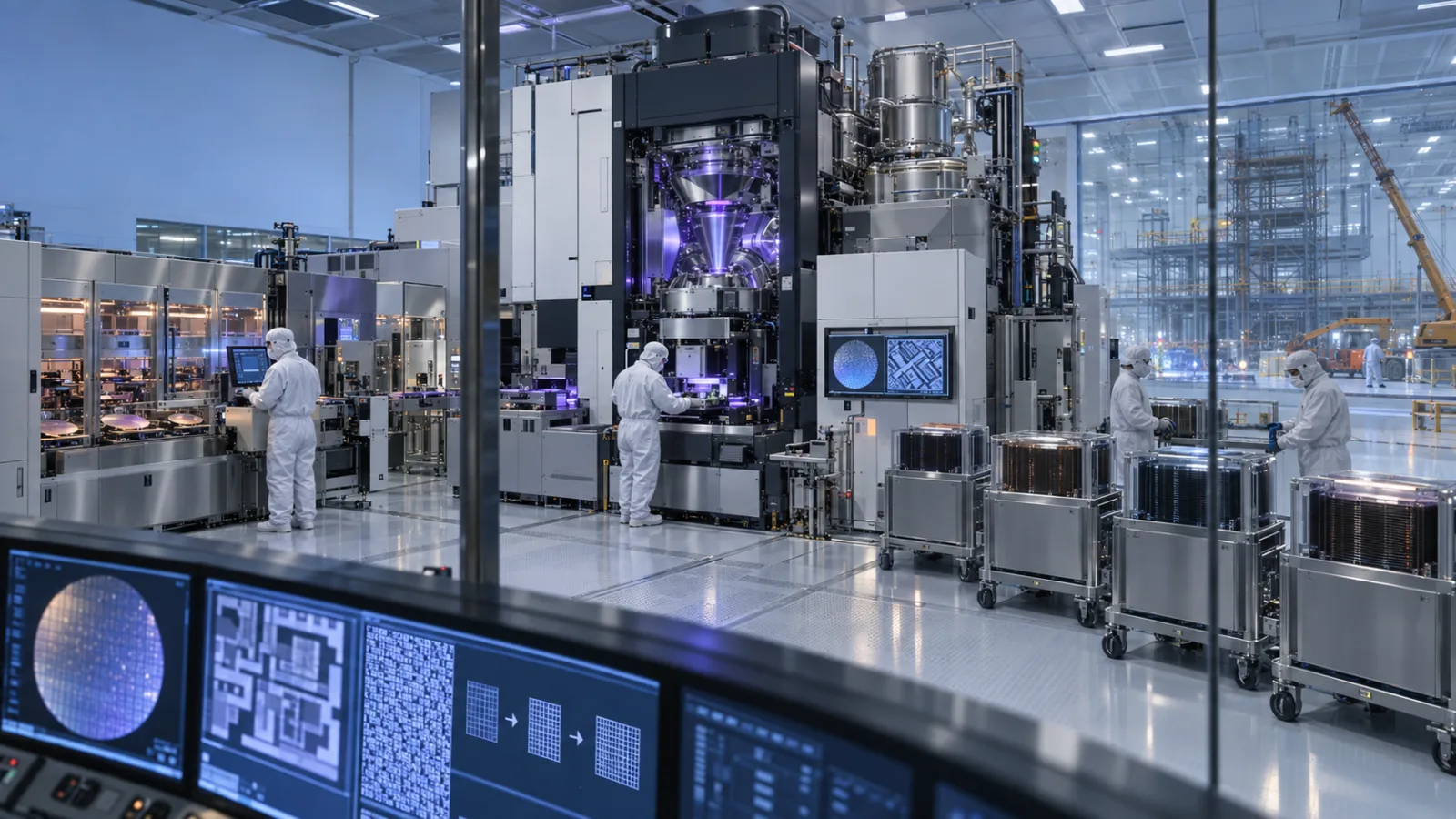
This is wafer fabrication,
requiring fabs,
very expensive manufacturing equipment,
and numerous process steps
to build DRAM cells on silicon wafers.
This is true front-end manufacturing.
Second: stacking these dies
Advanced packaging involves
stacking, connecting, testing,
and integrating multilayer memory
with AI accelerators,
to form a usable HBM solution.
SK Hynix’s Indiana facility is focused on
this second stage.
If talks about Ohio progress
It could mean moving one step earlier,
from
packaging in the US
to
partially relocating memory chip fabrication to the US.
This is the key reason
why today’s news is so noteworthy.
Why is there sudden urgency now?
The answer is straightforward:
AI consumes memory at a huge rate.
AI servers
need not only GPUs and numerous AI accelerators,
but also very high-speed
HBM.
Data centers keep expanding,
so cloud companies are naturally worried
about whether they can secure
enough memory in the future.
Previously, buying memory was like typical procurement
Now, cloud companies
may be willing to engage
earlier and deeper within the supply chain.
Reuters even mentions one potential plan
where major cloud firms are brought in directly,
because their real concern is not
"How much will memory cost next year?"
but rather
"Will there be enough supply next year?"
This reflects a major shift in the AI supply chain
Previously, hyperscalers mainly bought
servers, GPUs, and cloud infrastructure.
Now,
they are looking further upstream:
reserving GPUs, locking down HBM,
securing data center power,
and possibly even getting involved in manufacturing facilities.
Which explains Intel’s crucial role in this story
On the surface,
this looks like a SK Hynix expansion story;
but it’s equally important for Intel.
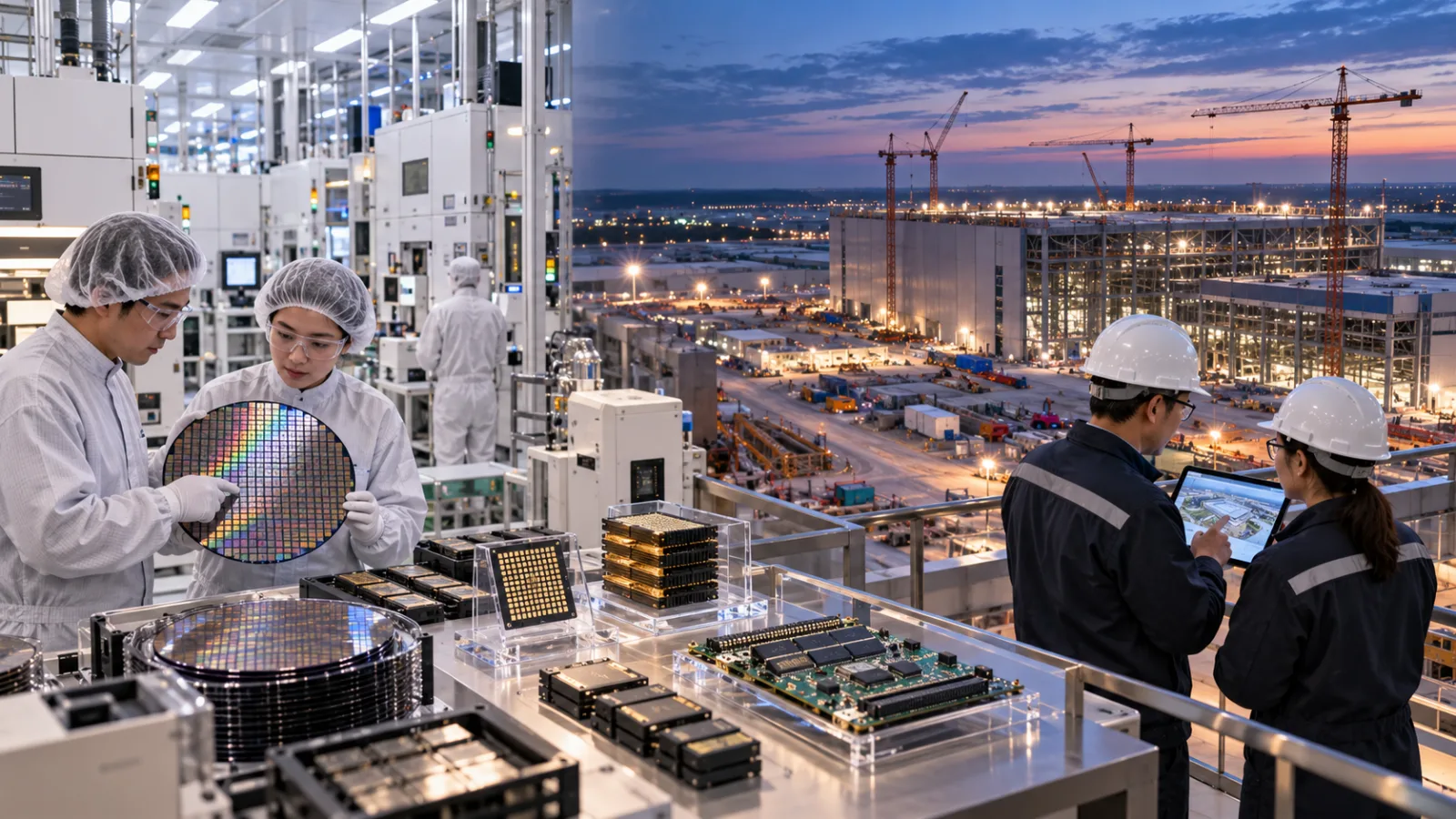
Intel has long planned
to build a massive semiconductor manufacturing campus in Ohio.
Initially hoping to start production earlier,
the timeline has since been pushed back.
Intel’s latest 2025 plan for Ohio
Ohio One:
First fab completion is targeted for 2030,
with operations starting in 2030–2031.
The second fab should be finished in 2031,
starting operations in 2032.
This is a massive investment,
but actual mass production remains years away.
If SK Hynix joins in, what does Intel gain?
Simply put:
A customer.
Or at least
a partner that can help utilize its manufacturing assets.
The biggest challenge of building a fab
is not just the construction cost,
but the huge expense of underused capacity.
Fab economics rely heavily on utilization
The more advanced the fab and equipment,
the less it can afford to sit idle.
If SK Hynix—
or even cloud companies—
join in,
they could provide concrete memory demand
to fill Intel’s Ohio fab capacity.
Why wouldn’t SK Hynix just build its own fab?
Because fabs in the US
are very expensive.
Sources told Reuters:
US semiconductor manufacturing costs
are higher than in South Korea,
due to labor, construction,
and the fact that much of the semiconductor supply chain
remains concentrated in Asia.
If materials, equipment support, suppliers,
and talent are not as clustered as in Asia,
costs naturally rise.
This is what makes today’s potential deal so interesting
SK Hynix has the memory technology;
Intel has the Ohio site;
Cloud companies have huge demand.
If the three come together,
theoretically,
each can complement what the others lack.
But,
this remains a possible framework only.
No formal agreement yet.
Another challenge: will advanced technology be shared or moved?
Reuters points out:
If advanced DRAM or HBM technologies become involved,
Korean authorities may require technology protection reviews.
South Korea’s Ministry of Industry told Reuters
that investments involving national core technologies
must undergo review under the Industrial Technology Protection Act.
This doesn’t mean South Korea has decided
to block SK Hynix’s move.
There is currently no such conclusion.
But this reveals a practical dilemma:
Companies want to get closer to customers;
customers want supply chains nearer to themselves;
the US wants more domestic manufacturing;
but South Korea also doesn’t want its key memory manufacturing capability
to move abroad in large scale.
Therefore, a fab isn’t just a business investment
but involves technology, supply chains,
and industrial policy.
This is where the AI boom is redrawing global manufacturing maps
AI models
may change generations in months,
but fabs
aren’t like that.
Where you decide to build today
might not start mass production
until five years later,
then operate for ten or twenty years.
Thus, AI-driven demand
is already pushing semiconductor companies
to invest with a 2030-plus horizon.
Memory urgency is especially high
Memory is no longer just a cyclic component for PCs or smartphones.
AI servers are creating
a fundamentally different demand structure for
high-end memory, especially HBM.
An AI accelerator
requires large amounts of high-bandwidth memory,
and the expansion of AI clusters
drives demand up in huge increments.
SK Hynix perfectly sits in this position
Reuters states SK Hynix
is one of the most important suppliers
of HBM for AI processors.
Thus, its customers
and governments
are urging it
to increase supply.
SK Group Chairman Chey Tae-won publicly said in July
the company is facing significant pressure
from customers and national governments
to expand production,
preferably by establishing factories in the US.
This statement is becoming more tangible now
Indiana focuses on
advanced packaging,
while if Ohio plans proceed,
memory fabrication
could also move there,
meaning SK Hynix’s US presence would expand
from just product finishing steps
to taking more of the supply chain across the Pacific.
But don’t assume this means "all Asian semiconductor production will relocate"
Manufacturing costs in the US are still higher.
Asia still boasts very mature clusters,
suppliers,
engineering talent,
and equipment support.
Thus, the more reasonable view is not
"Everything moves back to the US."
but rather,
"Businesses are willing to add another production base to ensure supply security."
This exemplifies supply chain resilience
Previously,
the most efficient approach
was concentrating all capacity in
the cheapest, most mature,
and most comprehensive region.
The issue was,
if that region faced geopolitical risks, natural disasters, power outages, or logistic disruptions,
all customers would be affected simultaneously.
Resilience thinking is the opposite
It may cost more,
but having a second or third production base
means not betting everything on one location.
AI demand is huge
and memory is critical,
so customers are willing to
pay for such backup.
This morning’s report on Micron’s Taiwan union relates directly to tonight’s news
Earlier:
We saw Taiwan as a crucial base
for Micron’s DRAM and HBM production.
Any labor risk
at such a vital center
raises
supply concerns.
Tonight:
We see SK Hynix exploring
expanding actual memory manufacturing
in the US.
Both stories
stem from
the same underlying issue.
AI memory supply cannot be just "cheap"
It must be
available.
And preferably not coming from
a single location.
This marks a shift in the AI supply chain
from
cost optimization
to
availability, resilience,
and geographic diversification.
What does this mean for the general public regarding AI?
Very directly.
Today’s ChatGPT, Claude, Gemini,
all require AI servers,
which need accelerators,
which need HBM,
which require memory wafers, advanced packaging,
and large-scale manufacturing equipment.
In the end,
this creates cloud computing power
that we don’t see directly.
So, as AI becomes more widespread,
hardware supply chains
become even more important.
People used to think of software
as having no factories.
AI seemed like pure software,
but now
it’s arguably one of the largest software industries
reliant on physical factories, power, chips, memory, packaging,
data centers, and infrastructure.
This explains why recent AI news increasingly covers
fabs, electricity, HBM, packaging, data centers, cooling, land,
and labor,
rather than just new models.
Because for AI to handle billions of requests daily,
it’s not just about a flashy model.
To summarize today’s news in one sentence:
SK Hynix
is already working on next-generation HBM advanced packaging
in Indiana.
Today’s new update is it may also
partner with Intel
to bring memory chip manufacturing
to the US for the first time.
If negotiations succeed,
this isn’t merely one more factory,
but a shift for AI memory supply chain
from
"the US receiving finished products"
to
"the US retaining more manufacturing steps domestically."
But as of now,
this is still in negotiation,
not a finalized investment decision.
What kind of memory,
the cooperation structure,
and the actual production timeline
remain to be seen.
Today, let’s progress together with AI.
Learn one new AI trick daily.
Save a bit more time every day.
Enhance your skills little by little.
SasaDaily, growing with you.