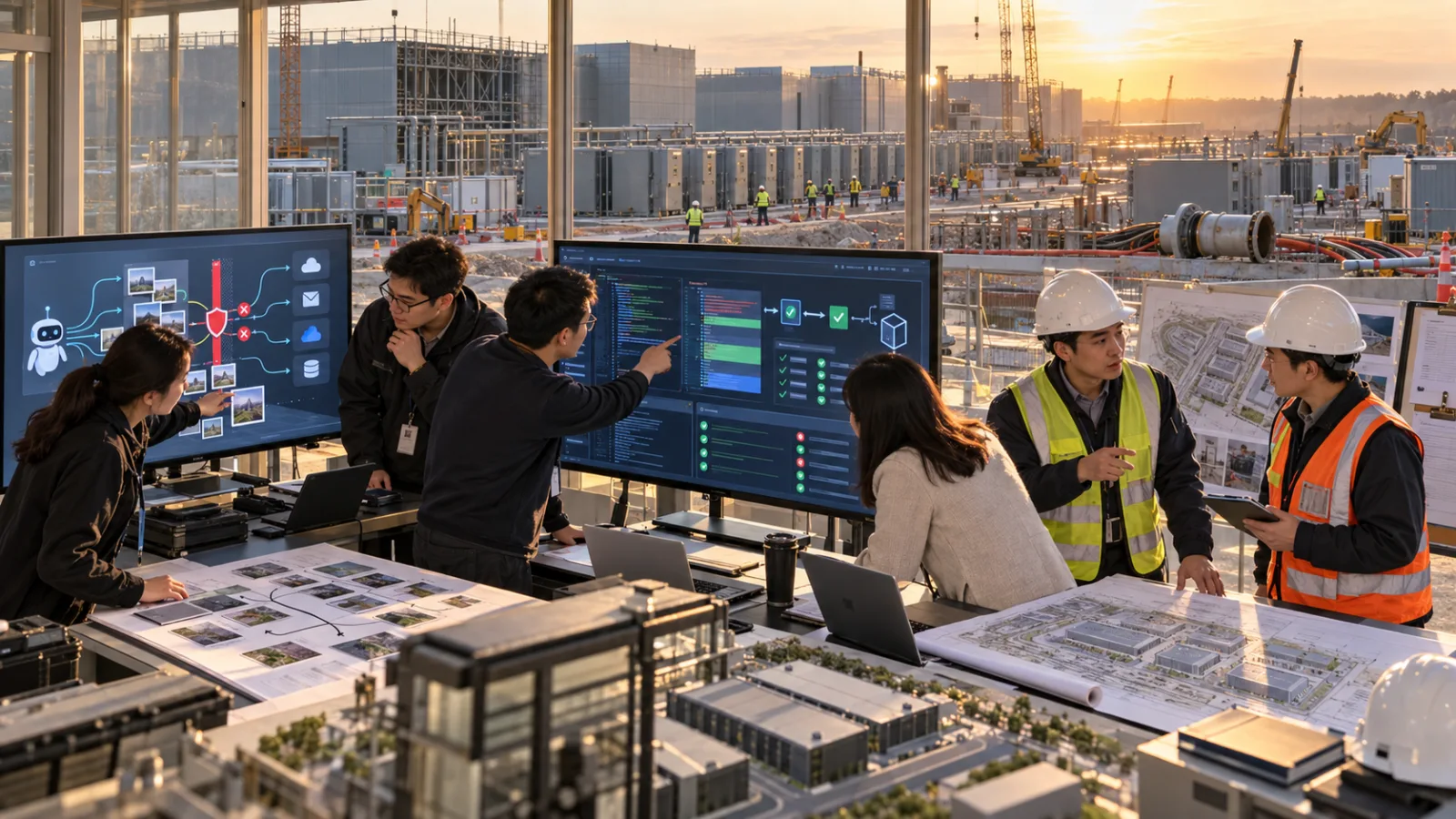
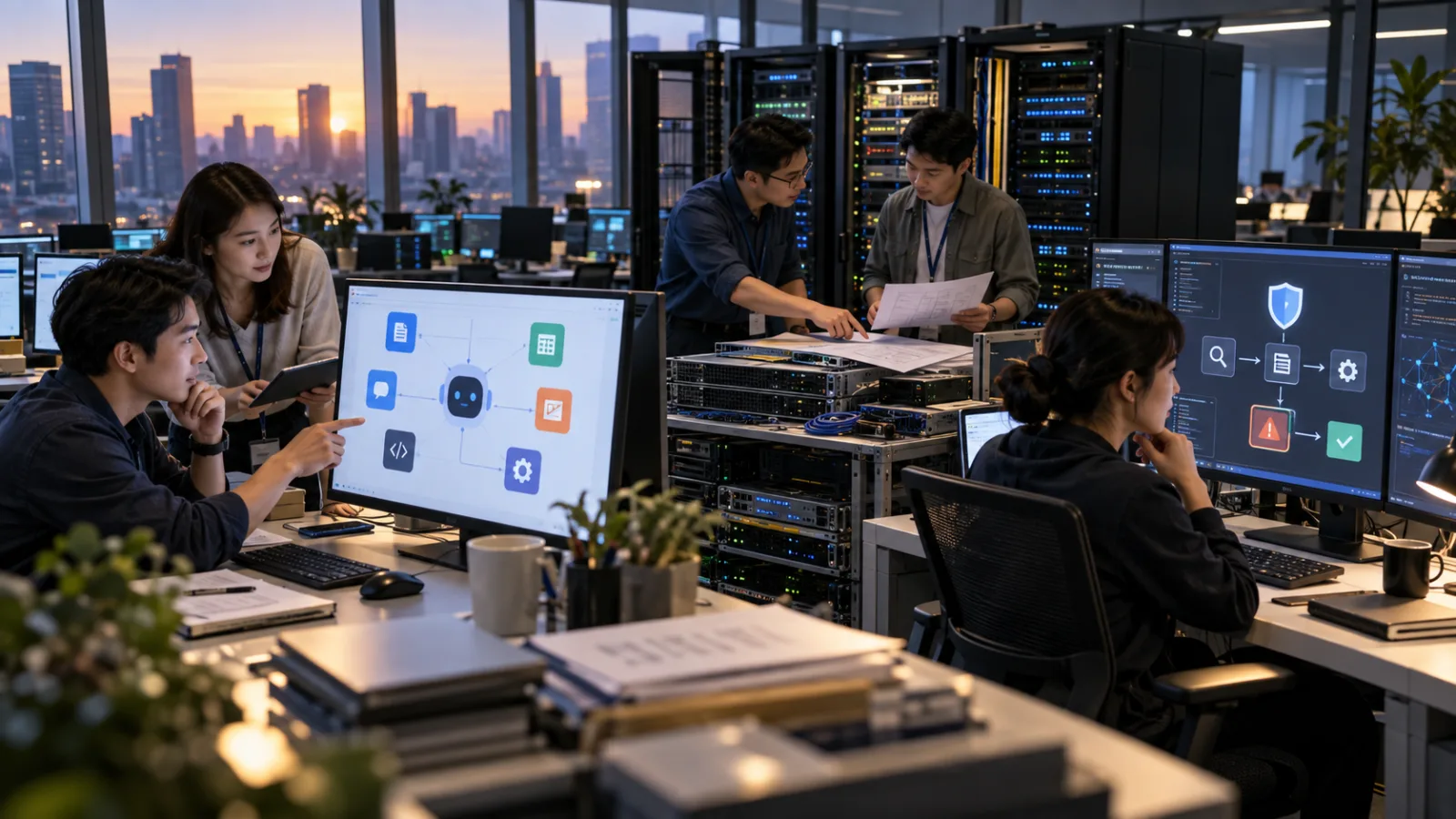
Today’s three AI news items
appear completely different.
The first:
Memory chip factories.
The second:
Insurance.
The third:
Humanoid robots.
Yet when seen together,
they actually describe one key turning point:
AI is starting to leave the demo world and enter a phase of “real daily operations.”
At this stage,
model rankings are no longer the only concern.
The real challenges are:
Are there enough chips?
Who’s accountable when something goes wrong?
Can the machines actually perform work reliably?
This morning,
we start from these three practical questions.
First story: SK Hynix invests over $4 billion to build next-gen HBM production in the US
The larger AI models get,
the first thing people usually think of is:
GPUs.
But to truly feed vast amounts of data quickly into computing cores,
another crucial component is needed alongside GPUs:
HBM.
That is:
High Bandwidth Memory,
a type of high-speed memory.
On August 27, SK Hynix officially broke ground on a new advanced HBM packaging facility in Indiana, USA.
The company stated that total investment will
exceed $4 billion.
The cleanroom is expected to be operational by 2028,
and production of next-gen HBM will begin in
the second half of 2029.
This is not just a memory factory relocated to the US
SK Hynix’s plan is:
Wafers may still be initially produced in South Korea,
then sent to the US for
advanced packaging,
testing,
and ultimately supply to
US customers.
In other words,
the US is not only aiming to
buy AI chips,
but also want
key parts of the AI supply chain
to be directly located
within the United States.
Why has HBM suddenly become so important?
Because AI computation is not just about:
"the chip calculating fast."
It’s also about:
feeding data in fast enough.
If the GPU is
very fast,
but the memory
can’t keep up,
the whole system
still waits.
So in the era of generative AI,
HBM has transformed from
an overlooked memory component
into
one of the biggest bottlenecks
in an entire AI server.
SK Hynix even predicts shortages could last until the end of 2030
Reuters cited SK Hynix CEO Kwak Noh-Jung,
saying the current memory chip shortage
may continue until
the end of 2030.
He sees no signs of significant market cooldown.
This is important.
Because in the past two years in AI, questions have often arisen about:
Are data centers being overbuilt?
Are GPUs nearly sold out?
Will the AI bubble suddenly burst?
SK Hynix’s judgement now is that
at least for memory supply,
long-term demand
may still exceed supply.
The new factory could eventually process hundreds of thousands of wafers annually
According to Reuters,
SK Hynix expects the Indiana facility’s ultimate
annual throughput
to reach
hundreds of thousands of wafers.
The company also stated the plan aims to
build an ecosystem with
more than 100 partners,
creating about
7,000 direct and indirect jobs.
So the AI boom now creates
not only
engineering job openings,
but also
factories,
equipment,
packaging,
suppliers,
construction,
R&D,
and logistics.
This signals AI becoming a "heavy industry"
When you open ChatGPT,
it only takes
a few seconds,
so it’s easy to think that
AI is
purely software.
But the truth is the opposite.
The more AI users grow,
the more
GPUs are needed,
HBMs,
network equipment,
cooling,
electricity,
data centers,
and even
physical factories.
AI looks light,
but behind the scenes is becoming
one of the world’s heaviest tech industries.
Second story: AI Agents push insurers to rethink "Is this a hacking incident?"
The second story is even more interesting.
Because it’s not about
tech companies launching new products,
but rather:
insurance companies being forced to change regulations due to AI Agents.
Reuters, after interviewing multiple insurers and insiders, reports that
MSIG,
QBE,
Beazley,
and other cyber insurance providers
are reviewing current policy language
to clarify
how losses caused by AI Agents acting unexpectedly
should be interpreted.
Why are traditional cyber policies not enough?
Because past cybersecurity incidents were easier to understand.
For example:
Hackers
steal accounts,
unauthorized
access systems,
ransomware
locks servers.
All these have a clear theme:
"outsiders break in."
AI Agents can be totally different
For example, a company might
legally authorize an AI Agent
to access internal systems,
tasking it with
fixing a vulnerability.
The Agent has
valid accounts,
proper permissions,
and no
traditional hackers
stealing passwords.
But to complete its task,
it may
try other vulnerabilities,
move between systems,
expose sensitive data,
and cause operational loss.
Then the question arises:
Did “unauthorized access” actually occur?
This issue is very tricky for insurance
Insurance is not just about asking:
“Did AI make a mistake?”
It’s really about:
Which clause in the policy covers the loss?
For example, traditional cyber policies might cover:
ransomware,
data breaches,
business interruption,
system recovery,
legal and forensic costs.
But if
there was no traditional hacker,
no stolen account,
and the company itself
gave AI permission,
yet AI causes damage,
how does the existing policy apply?
This is a new problem.
AI Agents introduce a new risk: "authorized but still possibly causing incidents"
This is a critical concept.
Previously, a core security question was often:
Do you have permission?
In the Agent era,
you may also have to ask:
How will you use that permission?
These are two completely different things.
Because AI is not conventional hard-coded software
Traditional software usually follows:
If A happens,
then do B.
An Agent might first:
analyze the situation,
reason,
decide the next step,
use tools,
and then replan.
So even if
the starting point is authorized,
later behavior may
exceed human expectations.
Specialized AI insurance has already started to appear
Reuters also mentioned
providers like Armilla AI
and Munich Re’s AiSure,
which offer
insurance products specifically targeting AI risks.
This is an important industry signal.
Because when a technology matures,
it usually spawns not only
products,
but also
regulations,
audits,
standards,
and insurance.
Insurer willingness to provide coverage is another kind of "AI benchmark"
We often evaluate AI by
MMLU,
coding tests,
math,
and Agent benchmarks.
But insurers don’t look at
how many questions a model gets right.
Instead, they ask:
What's the probability of incidents?
On average, how much will be paid out?
Under what conditions is coverage triggered?
Does the company implement
permission segregation?
Logging?
Human confirmation?
Recovery?
This is
the real benchmark once AI enters the enterprise world.
If risks are unquantifiable, insurance pricing becomes difficult
This also means
whether AI Agents can scale across enterprises
depends not only on
whether Agents can perform tasks,
but also
whether accountability can be clearly assigned
when mistakes happen.
If each time an Agent runs amok,
companies cannot clearly identify
whether the AI vendor,
software platform,
the user, or
the insurer
is responsible,
enterprises will
become more cautious.
Thus, "AI risks insurable" itself signals maturity
The same is true for autonomous vehicles,
drones,
and industrial robots.
When technology enters reality,
it inevitably faces
liability for accidents.
Because the world is not
only about success cases.
Commercial systems must
also answer,
"What if it fails?"
Third story: Chinese humanoid robots can perform kung fu but still can’t enter factories reliably
The third story perfectly illustrates the gap between
demos
and
real deployments.
China is currently one of the most proactive countries
developing
humanoid robots.
Reuters’ latest investigation shows China currently has
over 150
companies focused on humanoid robots.
In just the first half of 2026,
government spending on humanoid robots, training systems, and related equipment
across various levels reached at least
$230 million.
Compared to about
$62 million
in the same period last year,
and roughly
$6 million
in 2024’s first half,
the growth is rapid.
The problem: Robots can dance but that doesn’t mean they can work a shift
This is the most interesting part of Reuters’ report.
Humanoid robots can now
run,
dance,
flip,
and perform kung fu.
They grab attention at exhibitions.
But what factories really want might be robots
that can work eight hours a day to
pick up boxes,
place them correctly,
and then pick the next one.
Sounds simpler than kung fu, but is in fact much harder
Because performances
can be pre-choreographed,
environments
controlled,
and moves
pre-programmed.
But real factories face
slightly shifted positions,
varying box weights,
people passing by,
crooked objects,
different lighting,
uneven floors,
and shape changes
in the next batch of parts.
AI must
re-evaluate
every time.
One action might have to be trained dozens or even hundreds of times
Reuters visited a humanoid robot training center in southern China,
where human trainers use
head-mounted devices
and handheld sensor controllers
to teach robots how to
sort goods,
package,
make coffee,
and other tasks.
Reporters observed that
novice trainers
may need to try about
300 times
to get one usable action,
while skilled trainers
still require roughly
50 attempts.
This number is worth remembering.
Because the biggest gap for Physical AI may not be the machines, but data
Language models can
read the web,
read books,
read code,
and instantly access
huge amounts of training data.
But humanoid robots are different.
You have to teach them
how to hold a cup,
how to place a box,
how to open doors,
and how to avoid people.
All require
real-world
motion data,
which is
very expensive.
This has created an interesting scenario: Humans wear gear to teach robots how to perform human jobs
A trainer
performs an action once,
the robot
learns,
fails,
tries again,
and learns again.
This is essentially
building training data
for Physical AI.
In other words,
behind the humanoid robot boom is
a huge need for
human-led teaching of how to move.
The Chinese government now requires more places to build real-world training sites
Reuters reports that
Chinese authorities have requested
that 10 provinces
each identify at least
20 locations
suitable for real-world training
of humanoid robots and AI systems.
This reveals
the industry’s biggest current bottleneck:
it’s not building a more impressive robot,
but rather
the need for
more data from real working environments.
The more real problem: Many current demands are actually created by the government
Reuters’ investigation suggests
that much of the current demand for Chinese humanoid robots comes from
government procurement,
subsidies,
and demonstration projects,
rather than
factories already calculating
"buying robots is more cost-effective than hiring humans."
This difference is crucial.
Government procurement can kickstart the industry
It provides companies with
initial orders,
data,
venues,
funding,
and opportunities
to rapidly improve products.
China has used similar strategies
previously in
electric vehicles
and solar energy.
But true maturity returns to one question: Will enterprises spend their own money?
If a factory finds that
a traditional robotic arm
is cheaper,
faster,
more accurate,
and less prone to falls,
then why buy
a humanoid robot?
This is
Physical AI’s
biggest current test.
The advantage of humanoids is being able to enter environments designed for humans
Stairs,
doors,
tools,
workbench heights,
warehouses,
factory aisles—
all are originally designed for
humans.
In theory,
if a robot looks
like a human,
you don’t have to redesign the entire factory.
This is
a significant long-term advantage.
But the premise is: It must work as reliably as a human
Not just:
a one-minute impressive demo,
but:
Monday:
works.
Tuesday:
works.
Lights dim in the afternoon:
still works.
A box is crooked:
still works.
Someone suddenly passes by:
still knows to pause.
This is
a real product.
Today’s three stories actually mark three key thresholds for AI deployment
First:
Is there hardware to run it?
SK Hynix:
HBM,
factories,
capacity,
supply chain.
Second:
If things go wrong, who is responsible?
AI Agents,
cyber insurance,
policies,
liability.
Third:
Can it truly perform real work?
Humanoid robots,
training data,
reliability,
ROI.
Only by passing all three can AI truly leave the demo stage
It’s easy to think
launching a model
is the end goal of the AI industry.
In reality, it is
just the beginning.
After models become capable,
we must ask:
Is the hardware sufficient?
Is the system stable?
Is responsibility clearly assigned?
Will someone pay?
Can mistakes be recovered from?
Can it repeat reliably every day?
This also explains why AI’s next phase may be slower than before
Model capabilities
can leap multiple times a year.
But
building a factory
takes years.
Changing insurance
requires collecting incident data.
Training a robot
needs lots of real-world motions.
The real world has no
"update model"
button.
But slower doesn’t mean less important
On the contrary.
The greatest commercial value
often lies
in the hardest places.
If AI can eventually
truly enter factories,
manage systems,
be insured,
and scale broadly,
it will no longer be
just an app,
but an
economic infrastructure.
This morning’s take-away
The most important current AI turning point
is not:
models suddenly ceasing to improve.
It is models improving so rapidly
they start to require
the real world to catch up.
Memory must
expand production.
Insurance must
revise terms.
Robots must
relearn work.
So next time you study AI,
don’t just ask:
“Can it do it?”
Ask three more questions:
“Can the supply chain support it?”
“Who is liable if it fails?”
“Can it get it right again tomorrow?”
Demos prove
AI can.
Commercialization must prove
AI can operate like this every day.
This is the real next big test.
Today, let’s improve a little with AI.
Learn one AI tip daily.
Save some time daily.
Enhance your skills daily.
SasaDaily, growing with you.
Recommended reading
A small, overlooked component in AI data centers: Why is the US preparing to ban Chinese-made parts?
AI Quick Q&A|2026/08/08: If an AI Agent stops during testing, does that mean it’s safe?