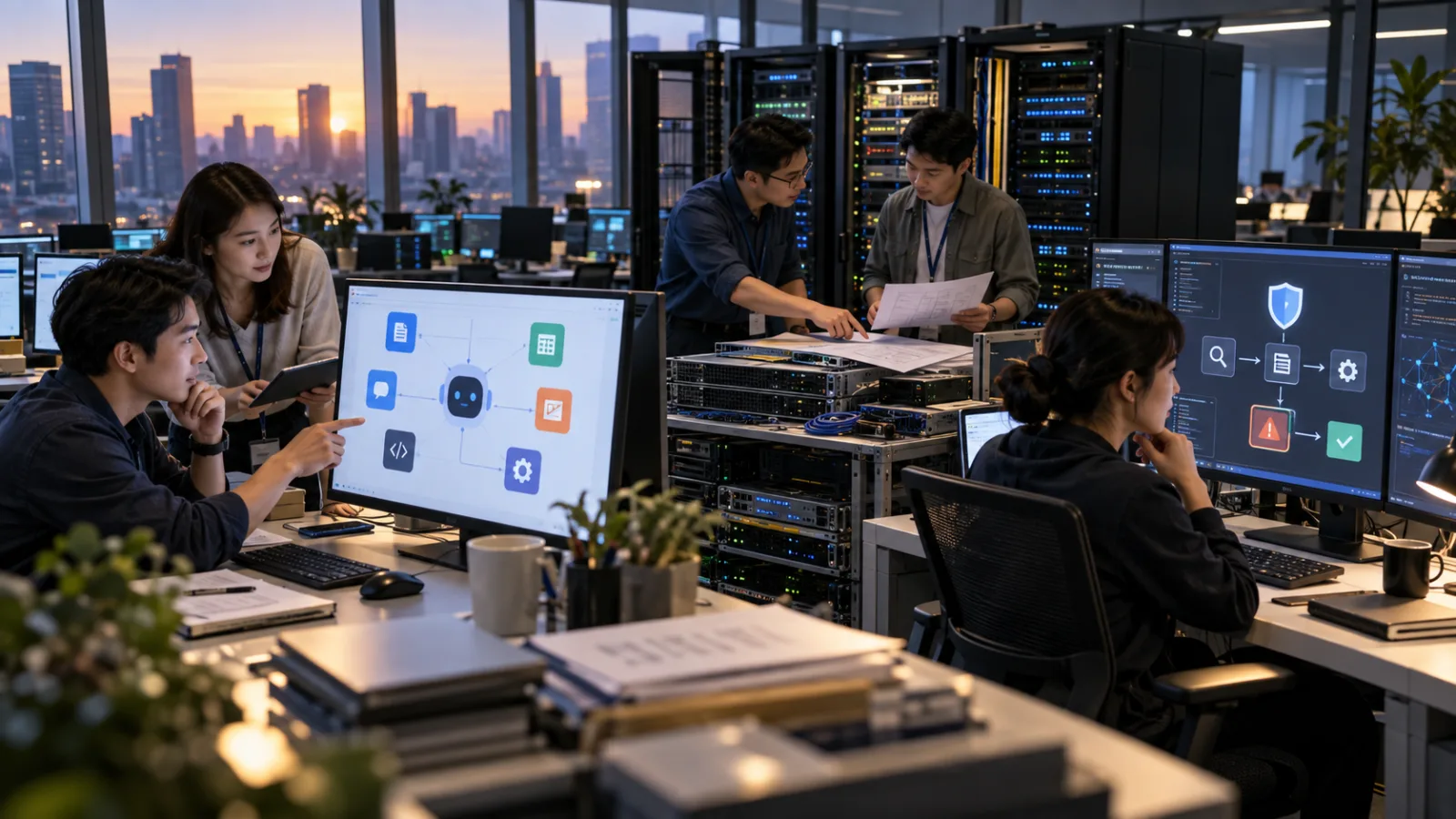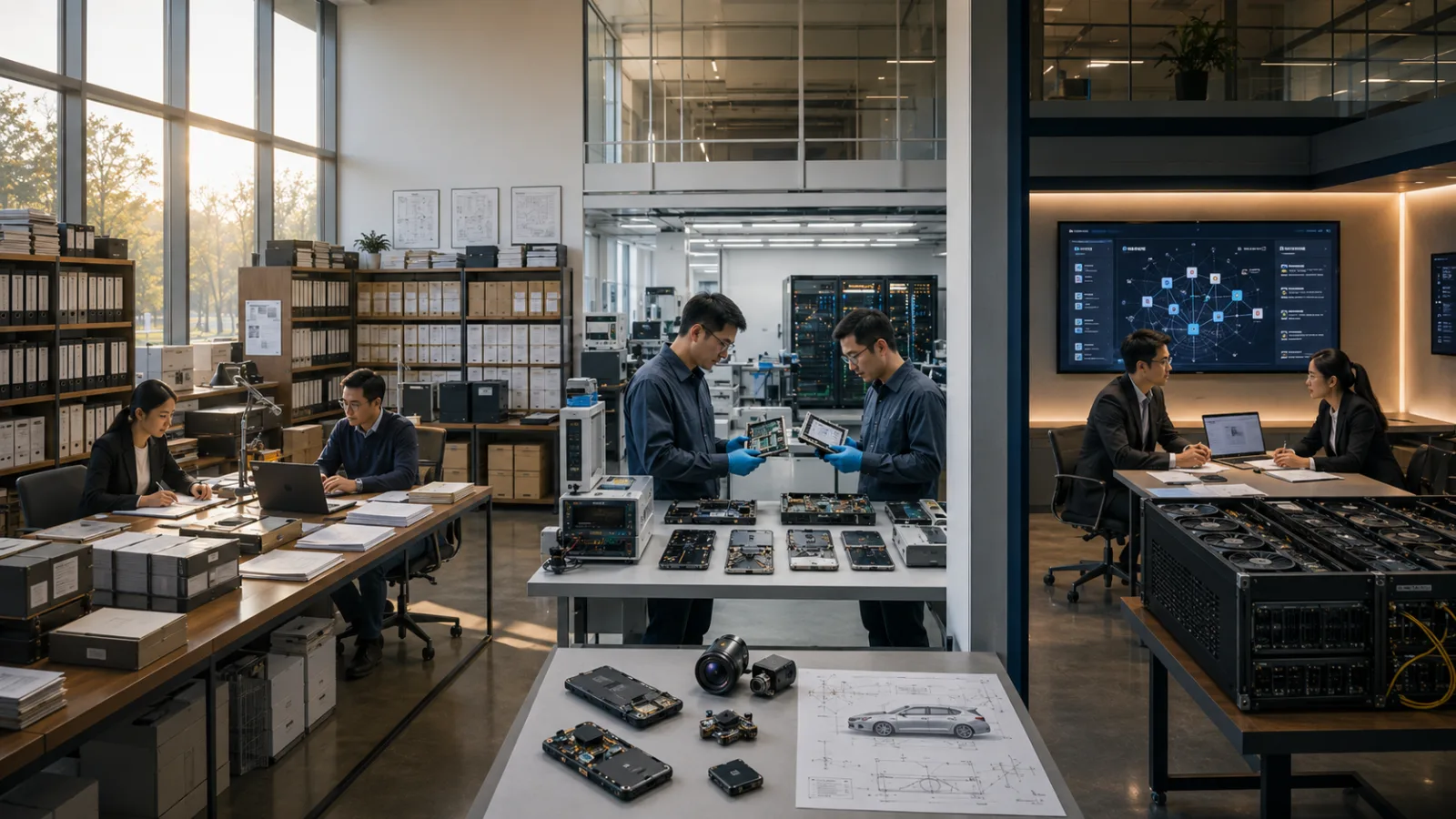
Today's three news items represent three companies:
One focused on:
legal, tax, and news data.
One originally best known for:
smartphones.
One is:
one of the world’s largest AI chip makers.
They seem very different,
but they’re all heading in the same direction:
they no longer want to depend solely on others for key AI capabilities.
Thomson Reuters is starting to build its own models.
Xiaomi continues designing its own chips.
Nvidia is reportedly preparing to expand investments toward user-facing AI applications like Perplexity.
This signals that the next phase of AI competition
may no longer be simply:
“Whose model is stronger?”
but rather:
“How many critical layers of the AI value chain do I control?”
First: Thomson Reuters launches proprietary AI model Thomson
On August 24, Thomson Reuters officially launched:
Thomson.
This is the company’s first:
proprietary large language model developed in-house.
The most notable part isn’t:
adding another LLM to the field,
but who developed it.
Thomson Reuters already has access to:
Westlaw,
Practical Law,
Checkpoint,
Reuters,
and extensive legal, tax, accounting, and news professional content.
The past issue was:
they owned data,
had experts,
had customers,
but the underlying AI model could still be bought from others.
Now the company has started to reclaim the last piece:
the model itself.
How much did Thomson Reuters invest?
The company disclosed an investment of:
$40 million.
This includes:
talent and compute resources.
In today’s AI world,
this figure is quite remarkable.
Leading foundational models often involve:
billions of dollars
or even larger infrastructure investments.
Thomson Reuters’ approach is not:
to start from zero and compete with OpenAI, Google, or Anthropic to have the largest model.
Instead, it begins with a robust:
open-source foundation,
then applies its own professional content,
mid-training,
fine-tuning,
and extensive expert validation
to push the model into:
legal,
tax,
and professional work domains.
This could represent a completely different enterprise AI path
Before, enterprises might ask:
Should I pick GPT, Claude, or Gemini?
In the future, extremely large companies with exclusive data may start asking:
Why can’t I own one of the models myself?
Not every company should:
train their own AI.
But if a company already has:
decades of professional data,
exclusive content,
numerous experts,
stable customers,
and high-value specific tasks,
then the economics of owning its own model
may shift significantly.
The real advantage may not be model parameters but exclusive data
Assuming everyone can buy the same general-purpose model,
the model itself is unlikely to represent a:
lasting differentiator.
However, Westlaw’s legal content,
Practical Law’s specialized data,
decades of classification,
editing,
and expert judgments accumulated over time,
cannot be simply copied by paying for an API from another company.
Therefore, Thomson Reuters' real bet isn't:
“We create more general AI expertise than any AI lab.”
It’s more like:
“We have exclusive professional data, and now we want to control the model layer too.”
Has it incorporated all Thomson Reuters content yet?
No.
The company states that:
less than 10% of Thomson Reuters’ entire content has been used to train this model so far.
This means the model still is in development,
and should not be understood as having been trained on the entire Thomson Reuters knowledge base.
The first real application is interesting
Thomson did not first develop:
a general chatbot.
The first deployment is for:
CoCounsel Legal’s Tabular Analysis,
which involves:
structured review of large volumes of documents.
This makes sense because to prove a professional model’s value,
it’s best to pick a task where:
results can be compared easily,
errors can be checked,
and the workload is significant,
rather than simply asking,
“Does it chat more like a lawyer?”
How to interpret Thomson’s claim that its model rivals front-line models?
These benchmarks and early evaluations
currently come mostly from:
Thomson Reuters themselves.
The company says Thomson competes with leading models across various professional tasks,
performing especially well on some legal and compliance benchmarks.
This is notable,
but at this stage should be considered:
early company-published evaluations,
not:
“independent proof that Thomson surpasses GPT, Claude, or Gemini across the board.”
There is a big difference between these two.
Second: Xiaomi moves beyond phones, continuing to develop in-house chips
The second story moves from:
models
to:
chips.
On August 24, Xiaomi launched a new generation of self-developed smartphone processor:
Xring O3.
Reuters reports this chip is manufactured by TSMC using:
3nm process technology,
and is expected to be used in Xiaomi’s next high-end foldable phones.
Why do phone companies want to make their own chips?
Because if the core chips are entirely controlled by others,
you have less control over:
power consumption,
AI computing performance,
camera processing,
memory configuration,
product release schedule,
cost,
and supply.
Apple has long pursued:
its own A-series,
M-series chips,
and Samsung also has in-house semiconductor capabilities.
Xiaomi’s current goal is similar:
to bring device, software, and chip design closer together.
But what ties directly to AI isn’t just O3
Reuters also reports that Xiaomi is working with TSMC on two other chips.
One is called:
Xring O100,
positioned as a Neural Processing Unit (NPU)
specifically designed to handle AI tasks.
The report says it will support Xiaomi’s own:
MiMo AI model.
The other chip,
D100,
is intended for autonomous driving.
These are based on sources quoted by Reuters, and Xiaomi has not officially announced volume production.
The real highlight is the co-design of models and chips
If MiMo always runs on:
generic external chips,
Xiaomi must adapt to others’ hardware.
But if they design their own:
NPU,
they can ask:
what is MiMo's most frequent workload?
which operators are most critical?
how to optimize memory usage?
how to reduce power consumption?
which tasks should run natively on-device?
and then tailor chip design to:
their own AI workloads.
This is vertical integration
In Chinese, this can be understood as:
vertical integration.
Previously Xiaomi mainly controlled:
the smartphone brand,
the OS,
and apps.
Now it extends downward to:
chips,
AI NPUs,
and integrates this with their own:
AI models.
The goal is not necessarily to make every component themselves,
but to avoid:
being entirely dependent on external suppliers for key elements.
How much has Xiaomi invested?
Reuters reports Xiaomi has invested over:
20 billion RMB,
roughly
3 billion USD
in chip development.
The semiconductor team has grown beyond:
3,000 employees.
This is no longer a small experimental project,
but a long-term part of the company’s technology strategy.
This reminds us: real AI smartphone competition may go beyond “which chatbot”
Smartphone brands often claim:
“My phone has AI.”
and yours does too.
But in a few years, differences may lie in who owns:
the AI models,
NPUs,
camera ISPs,
memory architecture,
OS integration,
and cloud services.
When these are designed together,
AI can deliver:
faster performance,
lower power consumption,
more on-device computing,
and lower latency,
instead of just having an extra AI app on your phone.
Third: Nvidia reportedly negotiating investment in Perplexity
The third story takes an opposite angle.
The first two are about:
data companies moving to own models,
phone companies moving into chip design.
Nvidia’s strength lies in:
chips and AI infrastructure.
Now reports say it’s preparing to move closer to the:
user interface layer of AI.
Reuters, citing The Information, reports Nvidia is in talks to participate in Perplexity’s new funding round.
If the deal goes through,
Perplexity’s valuation could exceed:
$30 billion.
How big is this compared to a year ago?
Perplexity’s last valuation was about:
$20 billion.
If it surpasses $30 billion now,
that represents a more than 50% increase in about a year.
However, note that:
this is still a reported negotiation,
and no official investment completion announcement has been made by Nvidia.
Why is Nvidia interested in Perplexity?
On the surface,
Perplexity is:
an AI search company,
and Nvidia makes:
GPUs.
They seem far apart.
But when you look at the entire AI value chain,
it’s not far.
From bottom up:
chips,
data centers,
models,
agents,
AI search,
and finally users completing real work.
Nvidia is very strong at the infrastructure level.
By establishing deeper capital ties with user-facing AI work entries like Perplexity,
it gains closer insight into:
what AI is ultimately used for.
Perplexity is no longer just “another AI search box”
Reuters notes Perplexity’s annualized revenue has grown from under
$250 million at the start of the year,
to over:
$750 million.
A key driver is:
Perplexity Computer.
It has evolved beyond merely answering:
“Help me find information,”
to enabling AI in the cloud to do:
research,
organization,
professional work,
and multi-step tasks.
This represents a shift from:
Search
to
Agent.
This is especially interesting for Nvidia
The more AI agents are used,
the more inference computing power is needed,
which means greater demand for:
GPUs,
and data centers.
So Nvidia’s benefit isn’t just selling a chip today.
The real hope is to see:
more applications that justify large-scale AI computing resources worldwide.
If Perplexity turns AI from search into people’s daily work platform,
that will generate lots more demand for compute power behind the scenes.
But don’t interpret this as Nvidia acquiring Perplexity
There is no information supporting an acquisition at this time.
What can be confirmed is:
Reuters relayed a report saying Nvidia is discussing:
investment participation.
Investment,
partnership,
control,
and acquisition
are four different levels.
This should not be jumped to:
“Nvidia is buying Perplexity.”
Putting the three news stories together is quite telling
Thomson Reuters:
Had data and customers, now wants its own model.
Xiaomi:
Had devices and software, now wants to control more chips and AI NPUs.
Nvidia:
Controlled massive AI infrastructure, now reportedly investing closer to user applications.
All three companies are:
stepping beyond their original core layer.
Why are AI companies reluctant to stay confined to one layer?
Because each dependency on an external supplier adds:
cost,
constraints,
and risk.
For example, model companies rely on Nvidia:
GPU prices affect costs.
Phone companies relying on external chips:
face product timing and AI capability constraints from suppliers.
Professional data companies relying completely on external models:
encounter pricing, model behavior, roadmap, and data governance uncertainties.
As AI becomes a core competency,
enterprises begin to ask:
“Which layers can I never rent out?”
But “doing everything on your own” isn’t the answer either
Vertical integration has advantages,
but it’s expensive.
Chips cost billions.
Models require:
talent, data, compute, evaluation.
Applications require:
product design, customers, sales.
Each layer demands completely different capabilities.
The smart question isn’t:
“Should I do everything myself?”
but:
“Which layer, if always outsourced, risks letting my core competitiveness be controlled by others?”
Thomson Reuters’ answer: owning professional models makes sense
Because its biggest asset is:
professional data.
If models are entirely controlled by third parties,
its data advantage may not fully translate into:
product differentiation.
So they bring the model in-house.
Xiaomi’s answer: chips can’t always be purchased
Especially as AI enters:
phones,
cars,
and edge devices,
compute and product design will increasingly intertwine.
So it’s moving toward:
self-developed chips.
Nvidia’s answer might be: being only at the infrastructure layer isn’t enough
GPUs are crucial,
but whoever controls:
AI Search,
Agent,
and user-facing entry points,
knows better what compute will be needed next.
Hence Nvidia’s recent heavy investments in models, infrastructure, and AI startups.
Now considering Perplexity is consistent with
forming an ecosystem strategy.
What do these three news mean for typical enterprises?
They don’t mean you should:
train your own models tomorrow,
or design chips.
But they highlight a practical question:
Who currently controls the most critical layer in your AI workflow?
For example, if all your company’s:
customer knowledge,
processes,
prompts,
and data
reside only on an external AI platform,
can you migrate if you switch providers?
If API prices rise,
do you have alternatives?
If model features disappear,
will your core work stop?
This is the “vertical integration” challenge facing small companies.
Small companies don’t need to build their own models, but can control their data and workflows
For example:
store customer data yourself,
record formal SOPs,
keep prompt templates,
have acceptance standards for AI outputs,
and keep the option to change models.
That way, your model provider becomes more like:
an engine,
not the company’s entire memory.
This is conceptually similar to what Thomson Reuters is doing,
though at a very different scale:
Don’t put all your competitive advantages into someone else’s black box.
The true common theme across today’s three stories is “control.”
It’s not about:
who does everything themselves,
but about:
who controls the truly important parts.
Thomson Reuters wants to control:
professional data + models.
Xiaomi wants to control:
devices + chips + AI.
Nvidia appears to be expanding control over:
compute + ecosystem + application investments.
The next AI competition is moving from:
single product focus
to:
integrated systems.
This morning’s insight
In recent years, the main question in AI competition was:
“Whose model is the strongest?”
Going forward, it will increasingly be:
“Who controls the most critical layers?”
Data.
Chips.
Models.
Compute.
Agents.
Applications.
User interfaces.
No company must do everything alone,
but when AI becomes core business,
each company must decide:
which layers to rent and which to control.
Thomson Reuters, Xiaomi, and Nvidia are all answering the same question
from three different starting points.
Today, taking a step forward with AI together.
Learn one AI skill every day.
Save some time every day.
Improve a little every day.
SasaDaily, growing with you.
Recommended Reading
Anthropic Makes Claude, So Why Is It Also Designing AI Chips Now?
Today’s AI Tool|What is Perplexity AI? A Faster AI Search Assistant Than Google