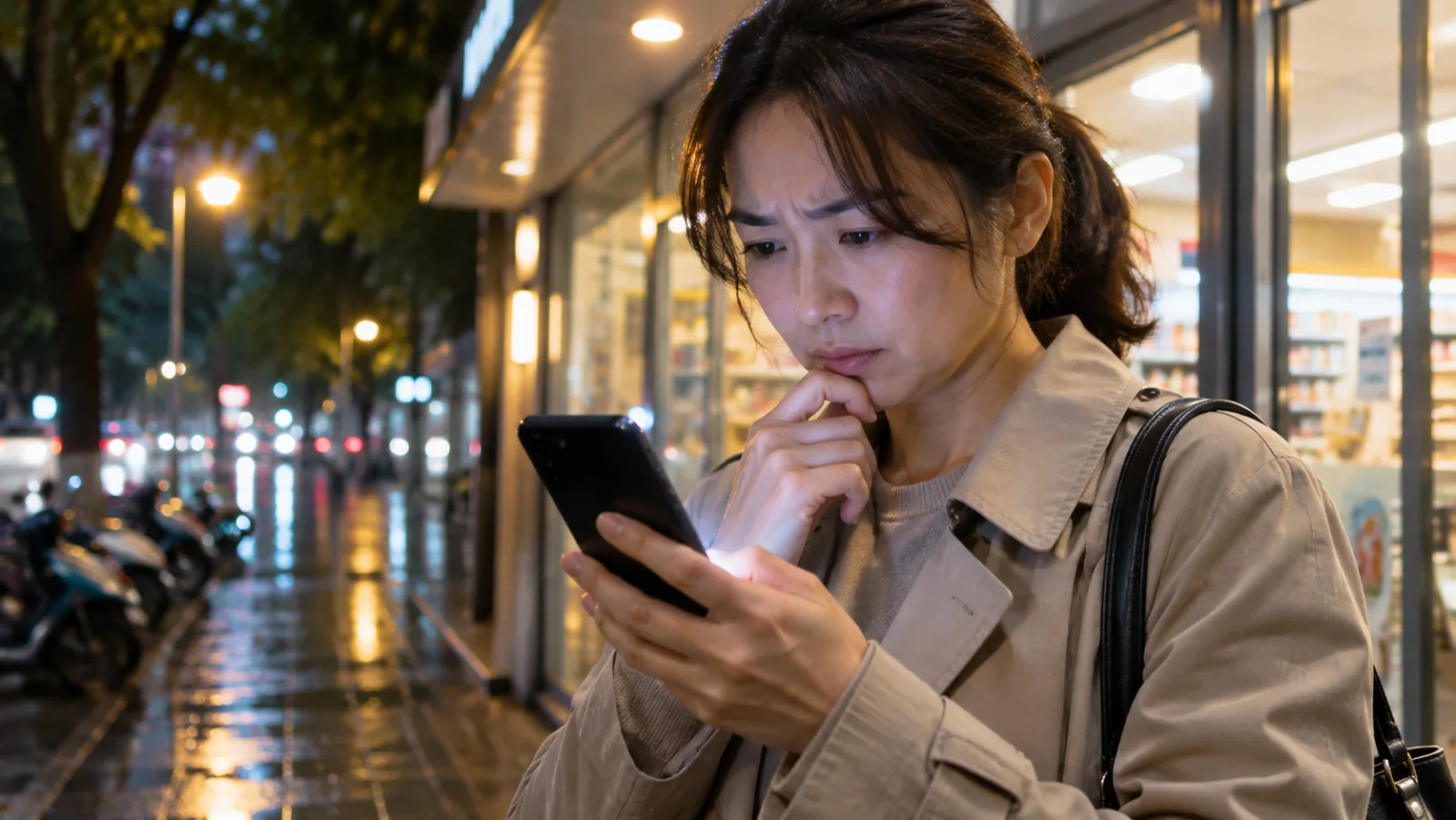
When you see news like “Google DeepMind uses AI to find encryption weaknesses, up to 1,600 times faster,” your first thoughts might be:
Is my online banking safe?
Could AI crack my passwords too?
Here’s the bottom line: This breakthrough affects outdated encryption methods that have mostly been phased out, leaving the encryption used by online banking unaffected; more importantly, the "encryption keys" websites use and the "passwords" you set are two separate things. The real concerns usually come down to weak, reused passwords or falling victim to scams.
Let's clarify it all now.
1. What exactly did DeepMind discover this time?
According to Interesting Engineering, researchers at Google DeepMind, under supervised conditions, used AI agents to identify two vulnerabilities in the outdated 1024-bit RSA encryption.
One vulnerability relates to digital signatures, where, under specific attacker-controlled conditions, the AI’s algorithm is theoretically about 1,600 times faster than the previously best-known attack methods.
The other reduces the average cost of "batch cracking" multiple 1024-bit keys by roughly 30 times.
These research results were verified within isolated testing environments.
2. Does this mean online banking encryption has been cracked?
No.
The reports clearly state that online banking, communication apps, software updates, and digital currencies commonly use 2048-bit or larger keys, which are not affected by this research.
1024-bit RSA encryption has largely been retired.
Also, the “1,600 times faster” is a theoretical improvement under specific conditions, not an indication that anyone can break encryption at will today.
3. Are a website’s "encryption keys" and my "password" the same thing?
No, this is a common misconception.
- Encryption keys: Managed by banks, websites, or app systems to protect data transmitted between you and the service or to verify authenticity of files or sites. Regular users normally never see or handle them directly.
- Passwords: The string of characters you personally create to prove "you are you."
DeepMind’s research concerns the former — and specifically older versions of the former.
So this news does not mean AI can directly guess your online banking password.
4. What are the usual risks to my account?
These are common cybersecurity facts, not part of this research:
Most account breaches aren’t due to encryption being mathematically cracked but because of:
- Weak passwords: Simple and easy-to-guess ones like birthdays, phone numbers, or “123456.”
- Password reuse: When one site leaks data, your accounts on other sites using the same password are at risk.
- Being scammed: Clicking on fake messages or websites and entering your passwords and verification codes.
It’s worth noting that AI makes scam messages more convincing and fluent, increasing the risk of “being scammed.” This inference is based on AI tool proliferation, not from the research itself.
5. What can the average person do today?
No need to panic over this news, but it’s a good chance to review your account security:
- Don’t reuse passwords on important accounts: Use different passwords for online banking, email, and social media accounts.
- Use a password manager: Let it generate and remember long and complex passwords for you.
- Enable two-factor authentication or passkeys: Even if your password leaks, it makes unauthorized logins very difficult.
- Don’t click login links in text messages: Instead, open your bank’s official app or manually type in the website address.
- Keep your phone, computer, and apps updated: Security patches are often included in updates.
6. Who should care most about this news?
The impact on average users is minimal but serves as a reminder for businesses and site administrators.
If your company systems still use old 1024-bit keys — such as legacy equipment or internal systems — it’s important to upgrade them promptly.
Interesting Engineering also shared DeepMind’s Chief Scientist Pushmeet Kohli’s perspective: As AI grows stronger in advanced mathematics, the security assumptions behind encryption methods need ongoing reevaluation.
The most important takeaway today
AI discovering weaknesses in old encryption is a significant advance in cybersecurity research, but it doesn’t mean your online banking will suddenly be unsafe tomorrow.
For the average person, account security depends more on habits than on mathematics.
Instead of worrying about AI breaking encryption, focus on whether you reuse passwords, have enabled two-factor authentication, and avoid clicking suspicious links.
Sources:
Recommended Reading
- Just scrolling TikTok, how cybersecurity researchers use free AI to find vulnerabilities and remotely access phone cameras
- AI Quick Q&A|2026/09/09: Does Muse with Sentinel + Approval guarantee no prompt injection attacks?
- AI Evening Report|2026/09/19: Gemini security tests accidentally accessed 3 real companies—one guessed passwords, two acquired credentials via public repositories