As AI develops faster, focusing only on smarter models is no longer enough.
On October 19, 2026, three key updates address practical issues arising from AI industry expansion: how company profits return to society, whether data centers have enough power, and who ultimately decides deal terms when AI starts negotiating.
1. Anthropic Plans to Allocate 5% Equity to a Public Benefit Fund—How Should AI Profits Be Shared with Society?
On October 18, Anthropic announced a plan to dedicate 5% of the company’s equity to a newly established Anthropic Public Benefit Fund, subject to shareholder approval.
The company also proposed a growth mechanism: whenever the company’s valuation surpasses a set benchmark by 50%, the board may choose to add an additional 2% equity to the fund.
Note, this does not guarantee an automatic 2% equity allocation every time valuation increases by 50%, nor does it mean that the fund has already received all the equity.
The fund will be structured as an Anthropic wholly-owned LLC rather than a traditional nonprofit. Anthropic stated resources could be used through nonprofit grants, direct aid to specific groups, and support for workers affected by AI.
The company clarified that fund-held equity will not be used for political donations or lobbying.
Why Does This Matter?
As AI company valuations soar and job impacts emerge, a pressing question arises:
If AI creates more economic value, how should society share those benefits?
Anthropic is experimenting with equity arrangements to address this.
However, this plan is not yet a realized public benefit.
The next focus is whether shareholders approve it, how the fund is governed, where resources ultimately go, and whether traceable impact reports are produced.
For the average worker, no special actions are needed now, and this announcement should not be taken as current grant eligibility.
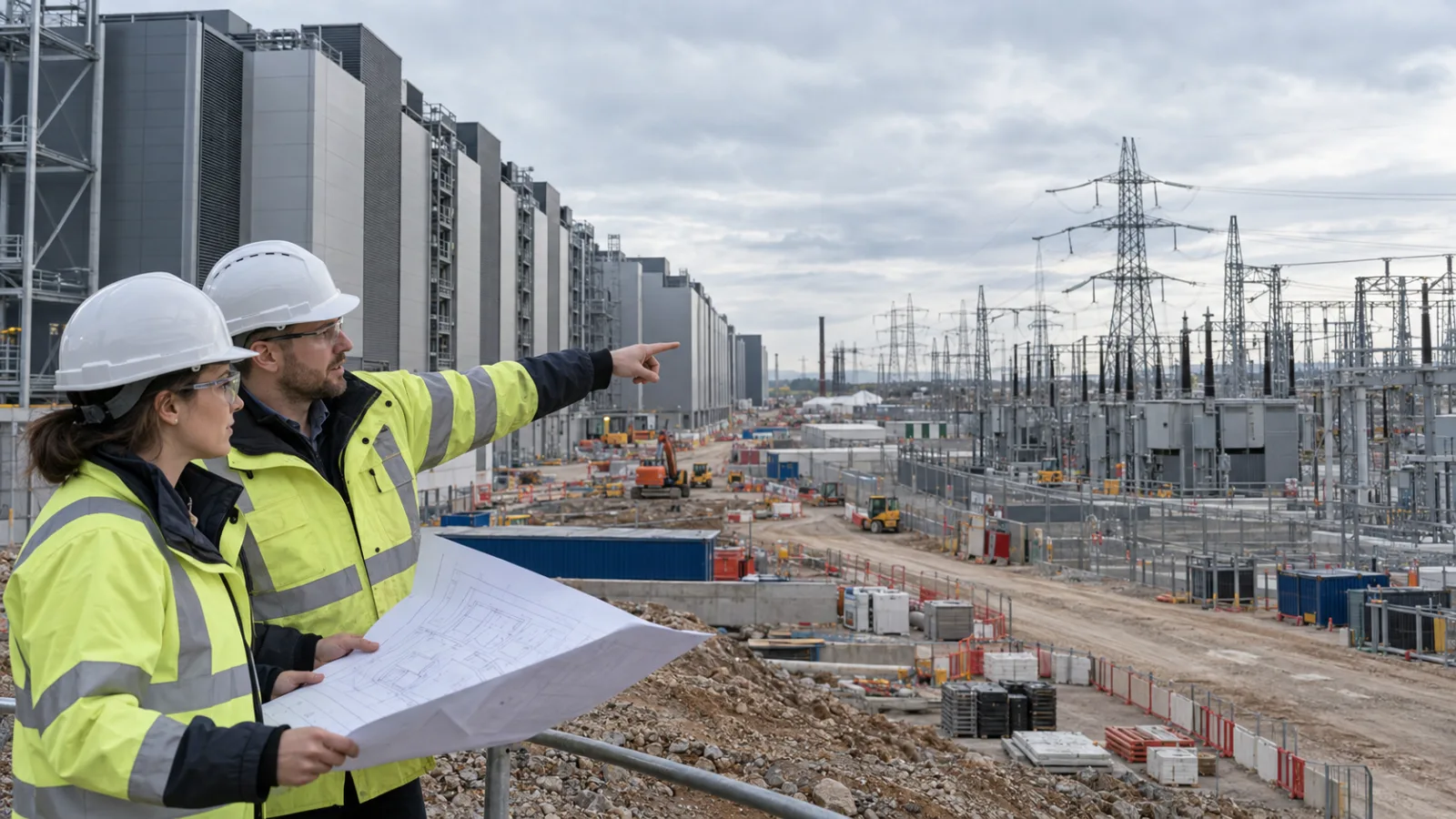
2. Microsoft Reportedly Exits UK AI Data Center Partnership—The Real Bottleneck May Not Be Chips
The biggest challenge for AI data centers is not necessarily GPU shortages.
Reuters cited British media on October 18 reporting Microsoft has withdrawn from a data center collaboration in Loughton, Essex, with UK AI infrastructure company Nscale.
This project was a key part of the UK’s efforts to build large-scale AI computing power.
The report noted severe power supply delays, with the grid operator estimating sufficient electricity might only be available in the 2030s.
Microsoft declined to specify reasons for exiting, so the power issue cannot be confirmed as the sole cause.
Nscale responded that it will continue advancing the Loughton project, seeking alternative power solutions, and emphasized that other collaborations with Microsoft remain unaffected.
Why Does This Matter?
Running an AI data center requires more than installing tens of thousands of chips in a facility.
It needs stable power, cooling systems, network connectivity, construction, and long-term operating funds.
A delay in any critical link can push back the entire business plan.
This incident offers a concrete reminder:
AI companies announcing huge computing commitments is different from when that capacity actually becomes operational.
For everyday users, this doesn’t mean current Microsoft or Azure services will stop.
But for enterprises purchasing AI capacity, evaluating cloud providers, or monitoring AI investments, it’s crucial not only to look at announced funding and GPU counts but also actual delivery timelines, power availability, and project risks.
3. Anthropic Reportedly Consults Lawyers on AI Agent Negotiations—Can AI Bargain or Commit Deals for You?
Previously, AI shopping helpers mainly compared prices or summarized products.
Next-generation AI agents might directly negotiate terms with sellers or even bargain with other AI agents.
Financial Times reported on October 18 that Anthropic is seeking legal expertise to study principles AI agents should follow when negotiating commercial deals on behalf of humans.
The research covers scenarios including pricing, customer disputes, and transaction terms.
This is still exploratory based on media reports, not the rollout of a fully automated Claude product that negotiates for all users.
In fact, Anthropic’s September Project Swap study had Claude agents swap books on behalf of employees, to observe how AI understands preferences, communicates with other agents, and completes deals.
The research also found that even if AI can negotiate, it might not fully understand what users truly want.
Why Does This Matter?
Imagine telling AI: “Find me the best-priced laptop.”
It may choose a low-cost product with longer delivery, no official warranty, or no refund policy.
Although the price looks good, it may not meet your actual needs.
This highlights the core challenge for AI agents negotiating: how far AI is authorized to go in bargaining.
Currently, to involve AI in procurement or negotiations, three aspects should at least be defined:
- Negotiation scope: which products, prices, and terms can be compared.
- Authorization limits: which personal data, reserve prices, or business information must not be disclosed.
- Final approval: any payment, contract signing, or irrevocable commitments require human confirmation first.
This is a risk management approach users can take now, without waiting for AI agents to fully conduct transactions.
What Do Today’s Three Stories Commonly Remind Us?
Anthropic’s public benefit fund plan reminds us that AI-generated economic gains need transparency and validation.
Microsoft and Nscale’s data center case highlights AI expansion’s dependence on real-world infrastructure.
Anthropic’s agent negotiation research raises a deeper question: while AI can do more for us, people must understand what decisions AI can and cannot make.
Evaluating AI’s future requires asking not only how smart it is, but where its value goes, what costs it incurs, and who holds responsibility for critical decisions.