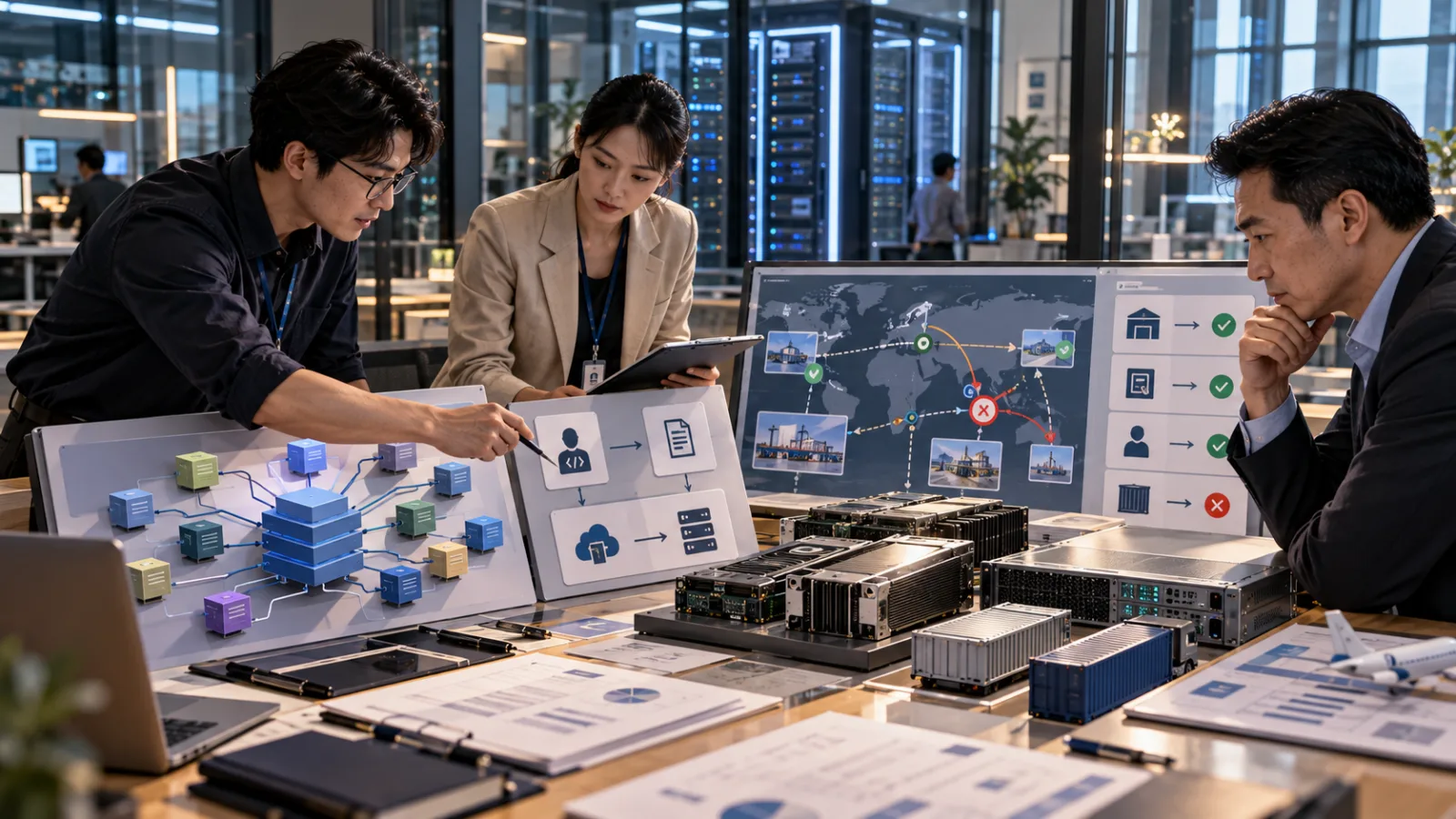
There are only two AI news items truly worth noting today.
One concerns:
Model companies.
The other concerns:
AI servers.
But in reality, they represent two ends of the same industry chain.
For cutting-edge AI to truly exist,
one side requires:
models,
research talent,
and training methods.
The other side requires:
GPUs,
servers,
and data centers.
Today’s two developments remind us:
AI competition is no longer just about "whose model is stronger," but about who can truly control the models and compute power.
1. Nvidia Reportedly Considering Direct Acquisition of Reflection AI
On October 10, Financial Times cited insiders reporting that:
Nvidia is in talks with Reflection AI for further investment and may even directly acquire the company.
Reuters later echoed this news.
The negotiations are currently:
At an early stage,
and no deal has been finalized.
Possible forms include:
direct acquisition,
further investment, or
even an acqui-hire—meaning Nvidia may not buy the whole company but mainly acquire talent and related technology licenses.
Why Has Reflection Suddenly Become So Attractive to Nvidia?
Because this company just launched its first large-scale open-weight model,
Beam,
on October 5.
Beam’s total parameter count is:
501 billion.
Due to using Sparse Mixture-of-Experts,
each token actually activates about:
23 billion parameters.
The model mainly targets:
coding,
reasoning,
and agentic workloads.
Reflection hopes Beam can become an important option for the US market to counter China’s open-weight models.
This Is Not the First Time Nvidia Has Seen Reflection
Nvidia is already an important investor in Reflection.
According to Financial Times, Nvidia has invested approximately:
$800 million.
Reflection CEO Misha Laskin said earlier this year the company is seeking new funding with a:
$25 billion pre-money valuation.
So the genuinely new information today is not:
"Nvidia invests in Reflection,"
which was already known.
The real new level is:
Nvidia may move from investor to outright controller of the company or its technology.
Why Would Nvidia Want to Own a Model Company?
Nvidia’s most important traditional role is:
selling GPUs.
But AI competition has extended far beyond that.
If it only sells chips,
it could profit from:
all the model companies.
However, if Nvidia simultaneously controls:
models,
agent frameworks,
inference software,
and deployment tools,
it can capture more value within its own platform.
Reflection itself now positions as more than a single model provider.
It openly states its goal to build a comprehensive:
Open AI Stack,
including:
open-weight models,
open-source software,
infrastructure,
and enterprise deployment.
This covers the full range from models to:
private cloud,
on-premise,
air-gapped,
and edge environments.
This is especially attractive to Nvidia,
which already controls a large share of:
GPUs,
networking,
and AI infrastructure.
More Sensitive: Reflection Represents a Key US Open-Weight Ecosystem Stake
Currently, much of the high-capability open-weight model competition comes from Chinese companies, such as:
Qwen,
DeepSeek,
Kimi,
and GLM.
Enterprises prefer open-weight because it allows them to:
self-deploy,
fine-tune,
host on their own infrastructure,
and retain greater control.
Reflection’s Beam aims to give US companies an alternative to choosing solely between:
closed APIs
and
Chinese open-weight models.
So if Nvidia really acquires Reflection,
it’s buying not just a 501B parameter model,
but potentially a:
strategic position in the US open-weight ecosystem.
But Today We Cannot Say "Nvidia Has Already Bought Reflection"
This is the most important boundary.
Right now, the only information is:
Financial Times citing insiders.
Reuters clearly states:
They cannot independently verify this news.
Nvidia and Reflection did not respond to requests for comment during Reuters’ publication.
Insiders say the negotiations could still fall through.
So what we can confirm today is:
Both parties are reportedly in talks.
Not that:
a deal has been signed,
an acquisition price is set,
or Beam is already an Nvidia model.
Beam Itself Has Not Had Its Full Weights Fully Released
This is also often overlooked.
When Reflection announced Beam on October 5, it said the model is still undergoing final:
red teaming
and
evaluation.
The complete:
model weights,
technical report,
model card,
and developer artifacts
are expected to be officially released later this month.
So the term "open-weight" currently describes:
Reflection’s announced release direction,
not that you can today download the full Beam weights.
If Nvidia Acquires Reflection, Will Beam Still Be Open as Planned?
Currently:
Unknown.
There’s no evidence Nvidia would cancel the original open commitment.
Reflection continues to clearly position open models at its core.
So negotiations should not lead to the assumption that:
"Beam will definitely become closed source."
Similarly, there are no guarantees that:
the company’s future models and licensing policies won’t change.
This is an often ignored nuance of open-weight models:
Model licensing and company ownership are distinct.
If enterprises rely on a model,
they must consider not only the current license,
but also:
who controls the company,
whether the roadmap will change,
whether APIs will be repriced,
and whether the model can truly be self-deployed.
2. $2.5 Billion AI Chip Smuggling Case: A Contractor Linked to Super Micro Pleads Guilty
The second matter shifts to the other end of AI:
hardware.
A contractor linked to:
Super Micro Computer,
Ting-Wei "Willy" Sun,
has pled guilty in the federal courtroom in Manhattan, USA.
He admitted to charges including:
conspiracy to violate US export controls,
smuggling goods out of the US,
defrauding the US government,
and obstruction of justice.
This case, publicly reported in March, is a major AI technology export case,
and represents the first significant instance of a defendant pleading guilty.
What Does This Case Involve?
The US Department of Justice indicted three individuals in March,
accusing them of secretly shipping:
high-performance AI servers
from the US to China.
The Nvidia GPUs involved in those servers included:
B200,
H100,
and H200.
These are advanced AI chips under US export controls.
The prosecution described the overall US AI technology smuggling scale as approximately:
$2.5 billion.
Why Not Ship Directly from the US to China?
Because it would be too easy for export controls to intercept.
The accusation is that relevant individuals used:
Southeast Asian companies
as pass-through entities,
making the shipment seem destined for other markets,
while concealing the actual end customer located in China.
The DOJ’s March indictment even alleges some used:
false documents,
staged dummy servers,
and other methods to mislead:
inspectors
and export control agencies.
Why Is This an AI Story and Not Just a Smuggling Case?
Because the real bottleneck of cutting-edge AI now is not:
who has a ChatGPT account,
but who can access sufficient high-end compute power.
A leading model requires:
a massive number of GPUs,
and different GPU generations directly affect:
training speed,
model scale,
and inference capacity.
The US restrictions on GPUs like:
H100,
H200,
B200,
essentially aim to limit:
cutting-edge AI compute power.
This is why:
AI chip export controls
have become one of the most crucial tools in US-China tech competition,
beyond mere trade policy.
Who Exactly Has Pled Guilty?
The person is:
Ting-Wei Sun.
It must be clarified.
There are other defendants in the case,
but their legal responsibility will be determined by judicial proceedings.
We cannot treat all indictments against others as established facts based on one guilty plea.
Super Micro Itself Is Not a Defendant in This Case
This is another important boundary.
The case involves:
personnel and supply chains related to Super Micro.
But:
Super Micro the company is not a defendant.
The company has said it has severed ties with involved individuals,
and that current management was unaware of these activities.
So the headline should not be simplified to:
"Super Micro pleads guilty to smuggling Nvidia chips."
That would be incorrect.
The accurate statement is:
A contractor associated with Super Micro has pled guilty in this case.
Why Is This Case More Noteworthy Than Past Export Control News?
Previously, we mostly saw:
the US adding more restrictions,
Nvidia chips they could not sell,
and Chinese company reactions.
But today there is an additional dimension:
Enforcement is genuinely entering the supply chain.
Merely:
chip model restrictions
are not enough.
Because real goods flow through:
distributors,
server vendors,
contractors,
end customers,
and transit countries.
If any segment specifically hides:
end-use,
company identity,
or delivery location,
export controls can be circumvented.
Therefore, the battlefront of AI chip control will increasingly resemble:
financial KYC (Know Your Customer).
The real focus will be:
who buys,
who receives,
and where the hardware ultimately resides,
not just what country appears on the invoice.
What Should Companies Do Because of This?
If you’re an ordinary ChatGPT user:
no action needed.
But if your company is involved in:
AI servers,
GPU distribution,
cloud infrastructure,
or cross-border hardware sales,
this is a very real issue.
Supply chain compliance can’t just stop at:
"Has the customer paid?"
It also needs to verify:
end users,
end uses,
destinations,
resellers,
transshipment risks,
and whether equipment is being re-exported.
High-end AI compute is no longer ordinary IT hardware.
It is treated as a:
strategic technology.
Why Are These Two Stories Worth Covering Together?
On one hand,
Nvidia reportedly seeks to:
directly acquire more control over a key US open-weight AI company.
On the other hand,
the US judicial system is investigating:
where advanced Nvidia chips are actually going.
One is about:
M&A,
the other about:
export controls.
But both are fundamentally about:
AI control.
At the model end, the questions are:
who owns the models,
who controls the talent,
and who decides licensing and roadmaps.
At the hardware end, the questions are:
who can get GPUs,
who is actually operating the servers,
and which country ends up with the compute power.
Cutting-edge AI is no longer just software.
It is an entire strategic supply chain composed of:
model + talent + chip + infrastructure + capital.
We used to ask:
"Which AI is the strongest?"
In the future, we may need to ask two more questions:
"Who ultimately controls this model?"
and
"Who holds the compute power to actually run it?"