Today's three AI news items:
On the surface:
One is:
AI company mergers.
One is:
Pharma using Claude.
One is:
Apple making servers.
But putting them together:
They're all answering the same question:
Once everyone has access to powerful AI models, where does the next real competitive advantage lie?
The answer is starting to become:
Who controls:
Where AI runs.
Which professional workflows AI integrates into.
And:
What kind of hardware AI ultimately runs on.
First: Cohere and Aleph Alpha Officially Sign Merger Agreement
The Canadian AI company:
Cohere.
And German company:
Aleph Alpha.
On September 16 announced:
They have formally signed a:
Business Combination Agreement.
This is not:
The first time they've explored cooperation.
Back in April this year:
They announced plans to combine.
At that time:
The valuation of the combined entity was roughly:
USD 20 billion.
Now:
They have taken the next step with a formal agreement but await final regulatory approvals.
After the merger, the company will remain named Cohere
And they won’t relocate Aleph Alpha entirely to Canada.
The plan is to have:
Two headquarters:
Toronto and Berlin.
Aleph Alpha’s original site in:
Heidelberg will remain a:
Research Center.
The combined workforce is expected to exceed:
1,000 people.
The key phrase behind this deal isn’t “bigger models”
But rather:
Sovereign AI.
That is:
Sovereign AI.
This term has become:
Increasingly important over the past year.
Because:
Governments, banks, healthcare, energy, manufacturing, defense, and highly regulated industries are beginning to realize:
They need more than:
“Which model scores best on benchmarks.”
What really matters is:
Where the data is stored.
Where the model runs.
Who can access this data.
Can it be deployed on their own cloud or on-premises infrastructure?
Which country's regulations must be followed.
This is very different from how most people use chatbots
We typically:
Use AI simply by:
Opening it,
Typing a question,
Getting an answer.
But if a bank:
Hands over:
Customer data,
Transaction data,
Risk models,
Internal documents
To AI,
They can’t just ask:
“Is the answer accurate?”
They must also ask:
Did the data leave the company?
In which country is it processed?
Who can access it?
What if the vendor changes policies?
In the future, if this AI model becomes unusable,
Can data and systems be moved elsewhere?
Therefore, the core of Sovereign AI is actually “control”
This doesn’t necessarily mean:
Every country must train its own ChatGPT from scratch.
More realistically, enterprises or governments:
Want to control:
Infrastructure,
Data,
Deployment,
Governance,
And model choice.
This is exactly the market target for Cohere and Aleph Alpha.
The two companies complement each other well
Cohere:
Has focused on:
Enterprise AI,
Allowing companies to deploy on:
Public cloud,
Private cloud,
Or even their own infrastructure.
Aleph Alpha:
These years, has concentrated more on:
Governments,
Highly regulated industries,
And European sovereign AI.
So one side is stronger in the global corporate market and models,
The other in the European public sector, institutions, and regulated industries.
Schwarz Group continues supporting behind the scenes
That is:
Lidl’s parent group in Germany.
Its affiliates plan to invest:
EUR 500 million.
Additionally, Reuters reports this might be supported by STACKIT,
Providing up to:
EUR 13 billion
In compute infrastructure investment.
STACKIT itself is a European cloud infrastructure platform established by Schwarz Group.
The real takeaway isn’t just “Another European AI company”
But rather that the AI market is developing:
New layers of specialization.
First layer:
General AI available to all.
Second layer:
Enterprise AI customized for each company.
Third layer:
Sovereign AI ensuring strict control over data, models, and infrastructure in regulated environments.
The further down the layers, the fewer customers,
But each with potentially higher value.
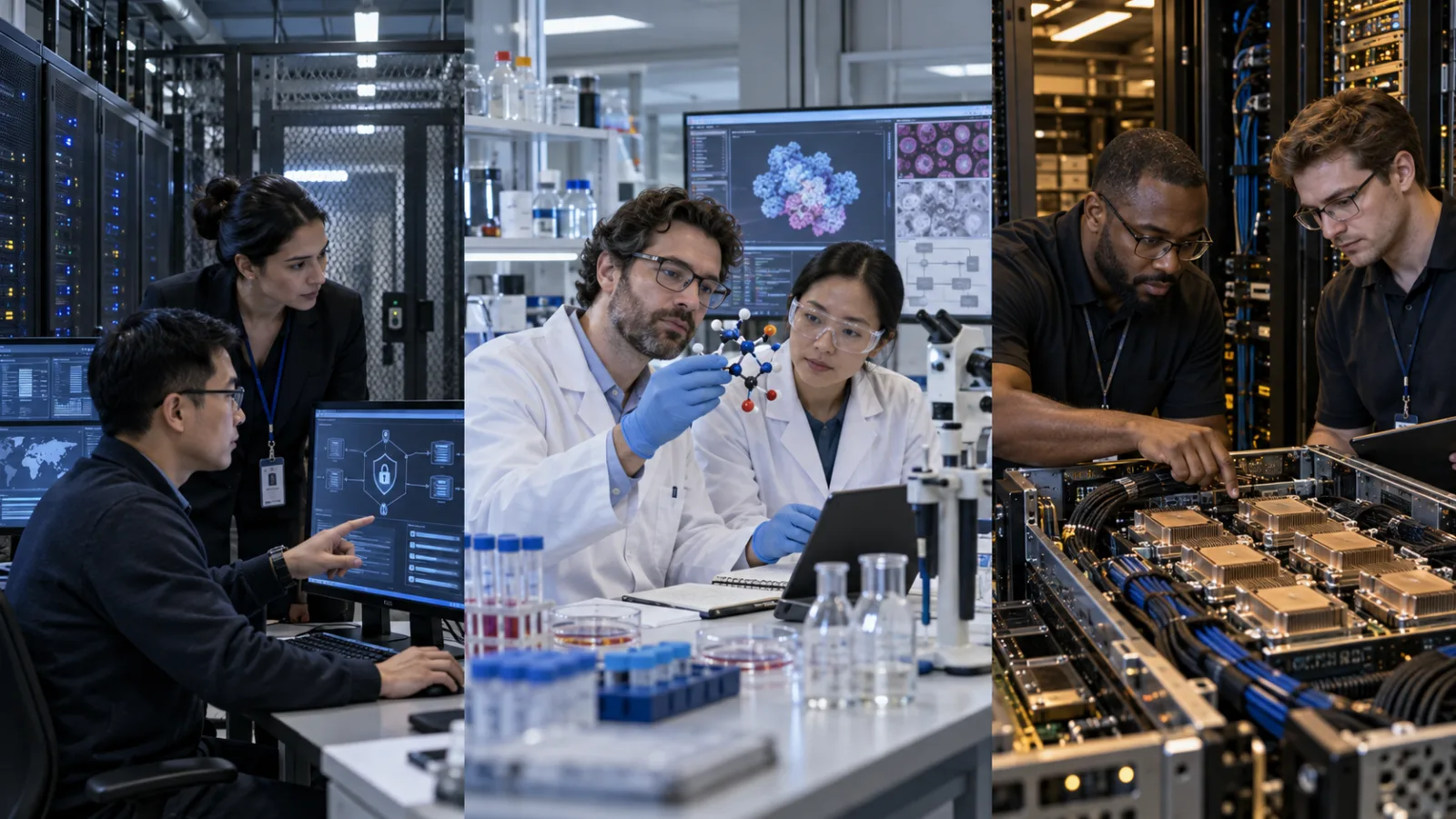
Second: Novo Nordisk Brings Claude into Real Drug Discovery
The second story is even more interesting.
Because it’s not:
A pharma company just using Claude to write emails.
But rather genuinely:
Entering:
Drug discovery.
Danish pharmaceutical company:
Novo Nordisk on September 16:
Announced a collaboration with:
Anthropic.
The goal is to leverage:
Claude and
Claude Science
To accelerate:
Drug discovery,
Development,
And scientific reasoning.
They aim to solve real R&D problems together
Novo Nordisk said:
They will initially select specific research workflows
And scientific problems
Allowing Novo’s scientists, computational team, and Anthropic
To jointly identify where AI can add the most value, such as:
Biological reasoning,
Scientific analysis,
And agentic software engineering.
This marks a new step forward in Claude’s role
The first phase of enterprise AI was mostly:
Document organization,
Email drafting,
Coding,
Summarization.
The second phase
Is beginning to:
Enter enterprises’ core workflows.
For Novo, that core workflow is:
Drug research.
Why is pharma particularly suited for testing AI?
Because drug R&D is:
Extremely slow,
Costly,
And failure rates are high.
From:
Understanding disease,
Target identification,
Candidate selection,
Preclinical,
Clinical trials,
To regulatory approval,
There’s a wealth of:
Scientific data,
Papers,
Experiments,
Documentation, and
Software work.
AI doesn’t have to invent new drugs from the start
It just needs to help researchers spend less time:
Organizing,
Searching,
Cross-referencing,
And documenting,
Which can already generate significant benefits.
Anthropic has previously shared a case study where Novo uses Claude to handle clinical documentation.
One number from Anthropic’s client case is striking
Some clinical study documentation initially could take:
Over 10 weeks
After using Claude:
That time shrank to about:
10 minutes.
Additionally, device verification protocol resource use was reduced by approximately:
95%, according to Anthropic’s case study.
Note:
This is a specific Novo case study announced by Anthropic.
It should not be interpreted as:
All drug research suddenly going from 10 weeks to 10 minutes.
Faster documentation and faster drug development are separate things
It’s important to separate these.
AI can:
Greatly speed up organizing regulatory documents.
Which is highly valuable.
But this doesn’t mean:
Clinical trials can be skipped,
Or that models declaring a molecule effective instantly make it a drug.
True new drugs still require:
Experiments,
Verification,
Clinical trials,
Safety testing,
And regulatory review.
What’s really important about Novo’s collaboration is AI’s entry into “scientific reasoning workflows”
It’s not aiming for Claude to replace scientists,
But to place AI inside the real daily work of scientists, for example:
Analyzing many experiments,
Comparing biological evidence,
Suggesting promising directions,
Organizing scientific context,
Assisting software development,
With final validation by researchers.
The biggest difference from regular enterprise AI use is the “cost of errors”
AI helping write marketing captions may be rewritten if wrong.
But in pharma R&D, if:
Reasoning is wrong,
Data interpretation is wrong,
Or scientific assumptions are wrong,
This can lead to wasting:
Time,
Money,
And even impact safety.
Therefore, high-value AI applications usually require:
Stronger verification.
AI in healthcare may not first replace doctors
It might instead radically change:
Doctors, researchers, and clinical teams’ work behind the scenes,
Handling vast amounts of data processing, documentation, analysis, software, and workflows,
Which is often invisible but very time-consuming work.
Third: Apple Reportedly Considering Re-Entering the Enterprise Server Market
The third story:
Is not yet an official announcement from Apple.
Reuters cites:
The Information reporting that Apple
Is exploring a return to the:
Enterprise server market.
This time not with traditional servers,
But with:
AI inference servers.
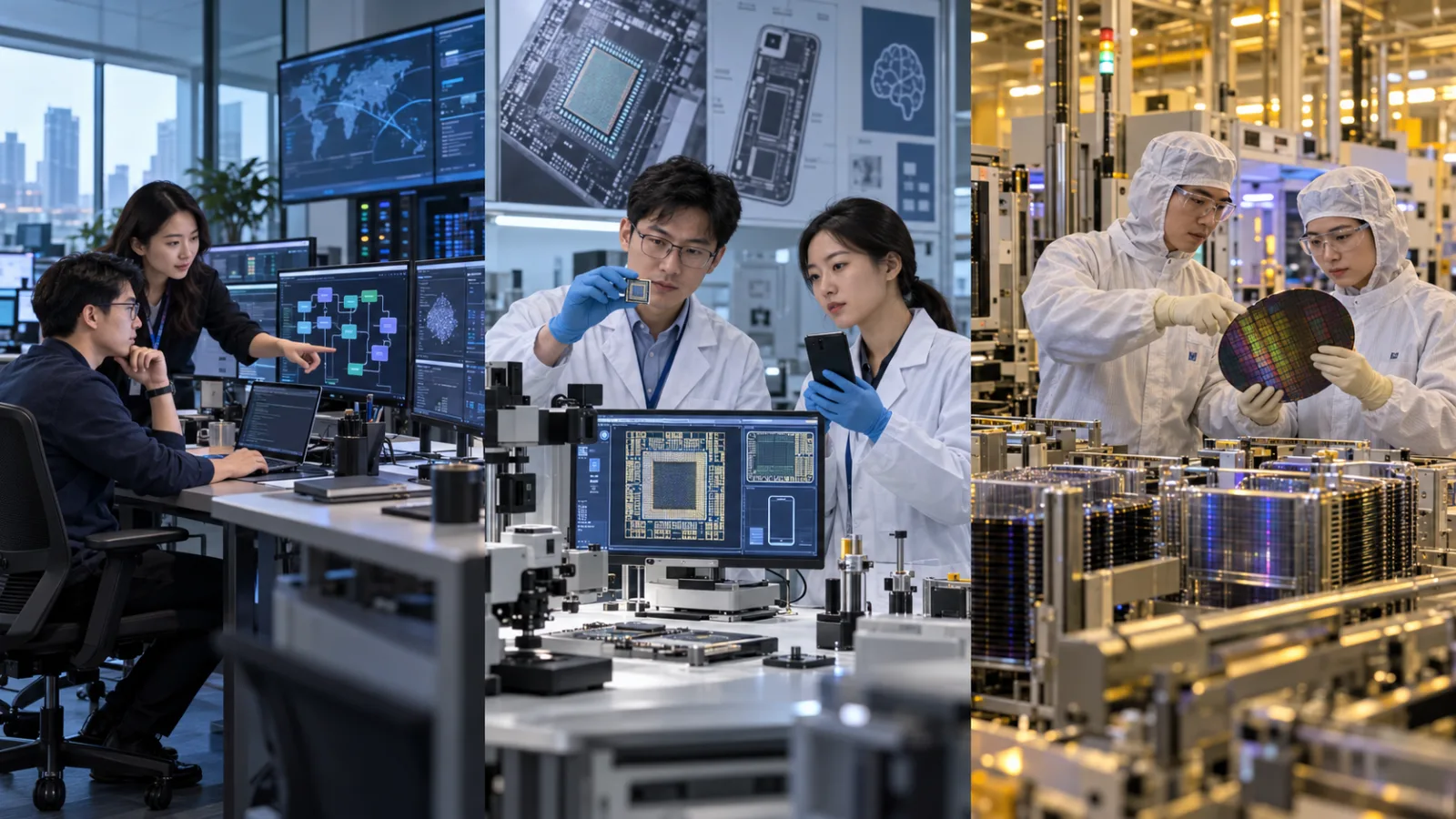
The core design under discussion involves Apple’s future M8 Ultra chip
Reports suggest:
There may be two configurations planned.
The first uses:
Two M8 Ultra chips,
The second uses:
Four M8 Ultra chips connected together,
Enabling large-scale AI inference processing.
Interestingly, Apple is reportedly working with Nvidia on NVLink Fusion
NVLink was originally designed:
To enable many high-performance chips to exchange data at high speed.
This is critical for AI servers,
Because a large AI model usually isn’t handled by one chip,
But many processors and memories working in concert.
If data transfer between chips is slow,
The fastest processors still have to wait.
Nvidia is reportedly willing to let competitors use this layer
This is the interesting part of NVLink Fusion.
Nvidia isn’t only saying,
“You must buy my GPUs.”
They are now looking to enable
Other companies’ AI chips
To connect to Nvidia’s networking ecosystem.
Meaning even if AI compute isn’t an Nvidia GPU,
Data movement can still happen using Nvidia technology.
If Apple actually adopts this, it would be a fascinating combination
Compute power: Apple
Connectivity: Nvidia
This differs from the usual Apple approach of
“Controlling everything themselves.”
But for AI infrastructure, this might make a lot of sense.
Because servers are very different products from iPhones.
AI inference and AI training are also separate domains
Training:
Is about building the model.
It typically requires:
Massive GPU power,
Large memory,
Huge data sets,
And long computation times.
Inference:
Is when the model already exists.
Users start asking it questions,
Getting outputs like answers, images, code, voice,
Or triggering agents.
After AI reaches mass adoption, inference may become the bigger long-term battleground
Because models might be trained only:
Every few months,
But inference can occur daily billions or hundreds of billions of times.
Therefore, AI servers will compete not just on training performance,
But on inference speed, cost, power efficiency, memory, and networking.
This happens to be an area Apple Silicon is eager to enter
Apple has spent years designing processors for Macs and iPhones,
with a key focus on:
Performance per watt -
Doing more work for the same power.
If this capability scales up to servers,
Apple could find a strong foothold in the inference market.
But don’t expect the M8 AI servers to launch soon
Reports say it might not debut until:
2029
And the project may still change or even be cancelled.
NVLink Fusion usage isn’t confirmed yet either.
Neither Apple nor Nvidia has officially commented.
Reuters states it could not independently verify The Information’s report.
So for now, this is just:
A possible direction Apple is exploring.
Apple actually exited the dedicated server hardware market long ago
They used to have a product line called:
Xserve,
But discontinued it in 2011.
Since then, enterprise customers mainly use Macs and other consumer or professional hardware.
If Apple really returns now,
It will mark nearly 20 years since they last developed dedicated enterprise servers,
And the driver would be AI, not traditional IT.
The common thread from today's three stories is AI’s move toward specialization
Cohere and Aleph Alpha speak to:
Deployment specialization.
Not all companies dump their data into the same public AI.
Some need to deploy AI within their own infrastructure, governance, and jurisdiction.
Novo and Anthropic illustrate:
Workflow specialization.
Claude doesn’t do a little of everything,
But enters real drug discovery, biological reasoning, and scientific workflows.
Apple and Nvidia might represent:
Hardware specialization.
Not all AI uses the same GPU.
Different inference workloads may use different custom chips,
Connected by high-speed networks.
This suggests the next phase of AI may not be “one model rules all”
Rather, AI will become increasingly layered, with:
General models handling broad tasks,
Industry AI incorporating specialized data, workflows, and rules,
Enterprise AI adding layers of permissions, security, governance, and infrastructure,
And hardware varying by training, inference, edge needs.
When the AI industry truly matures, it may look much less like ChatGPT
Because the chat window we see is just the front end.
Behind the scenes, enterprises may run:
Private clouds,
Specialized agents,
Research workflows,
Audits,
Data permissions,
Custom chips,
Networks,
And heavy human verification.
So, the most important takeaway from today’s three news items isn’t about three brands
But that the focus of AI competition:
Is changing.
In 2023, everyone asked:
“Whose model is strongest?”
In 2026, the question evolves to:
“Can this model be deployed within my enterprise?”
“Can it handle my professional workflows?”
“Can it run on the hardware and infrastructure I choose?”
In the future, building a moat may no longer be about just model weights,
But
Model + Data + Workflow + Infrastructure + Control.
That is the common direction reflected in today’s three stories.
Today, progress a little with AI.
Learn one new AI skill every day.
Save a little time daily.
Improve your abilities step by step.
SasaDaily, growing with you.