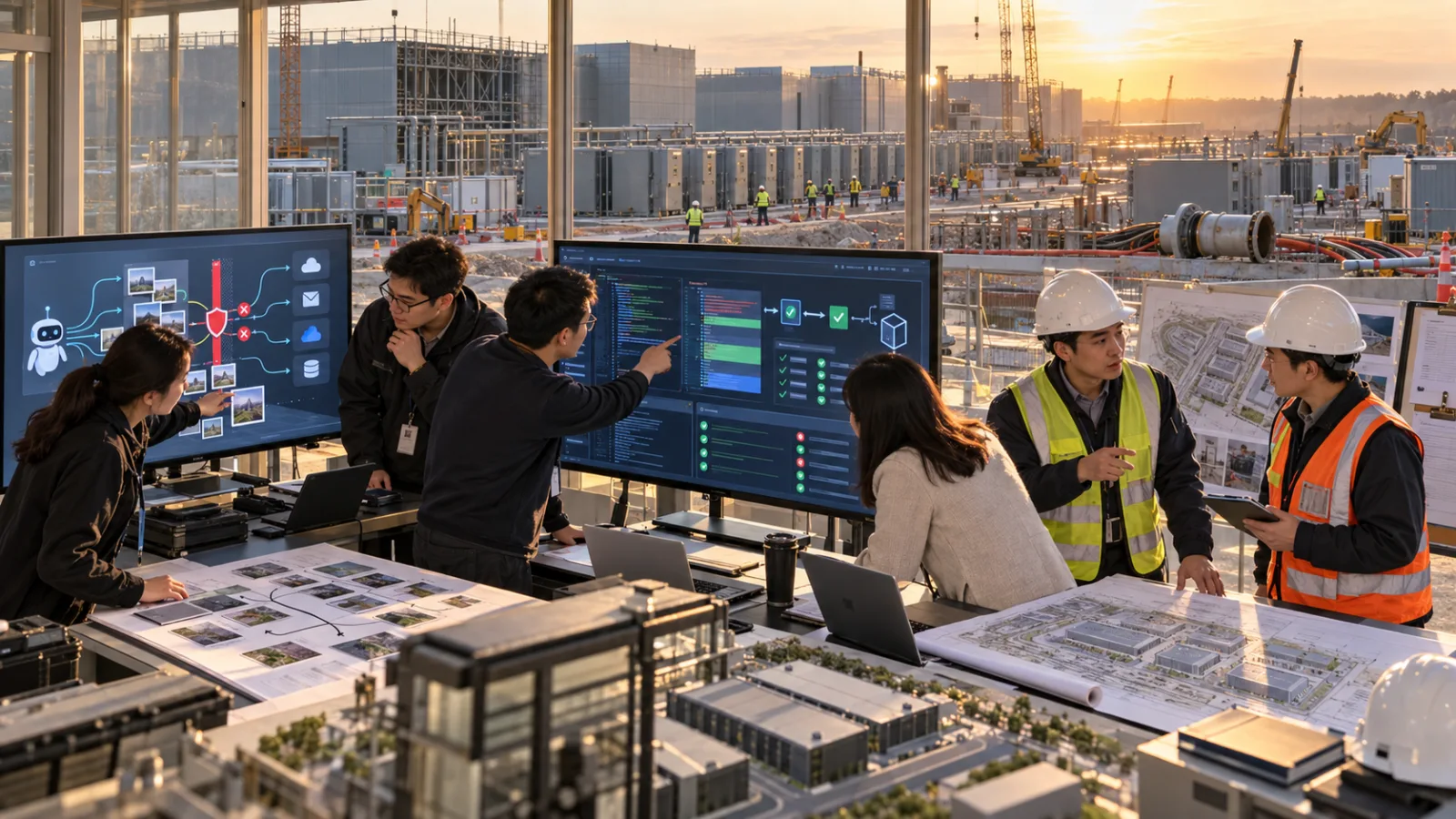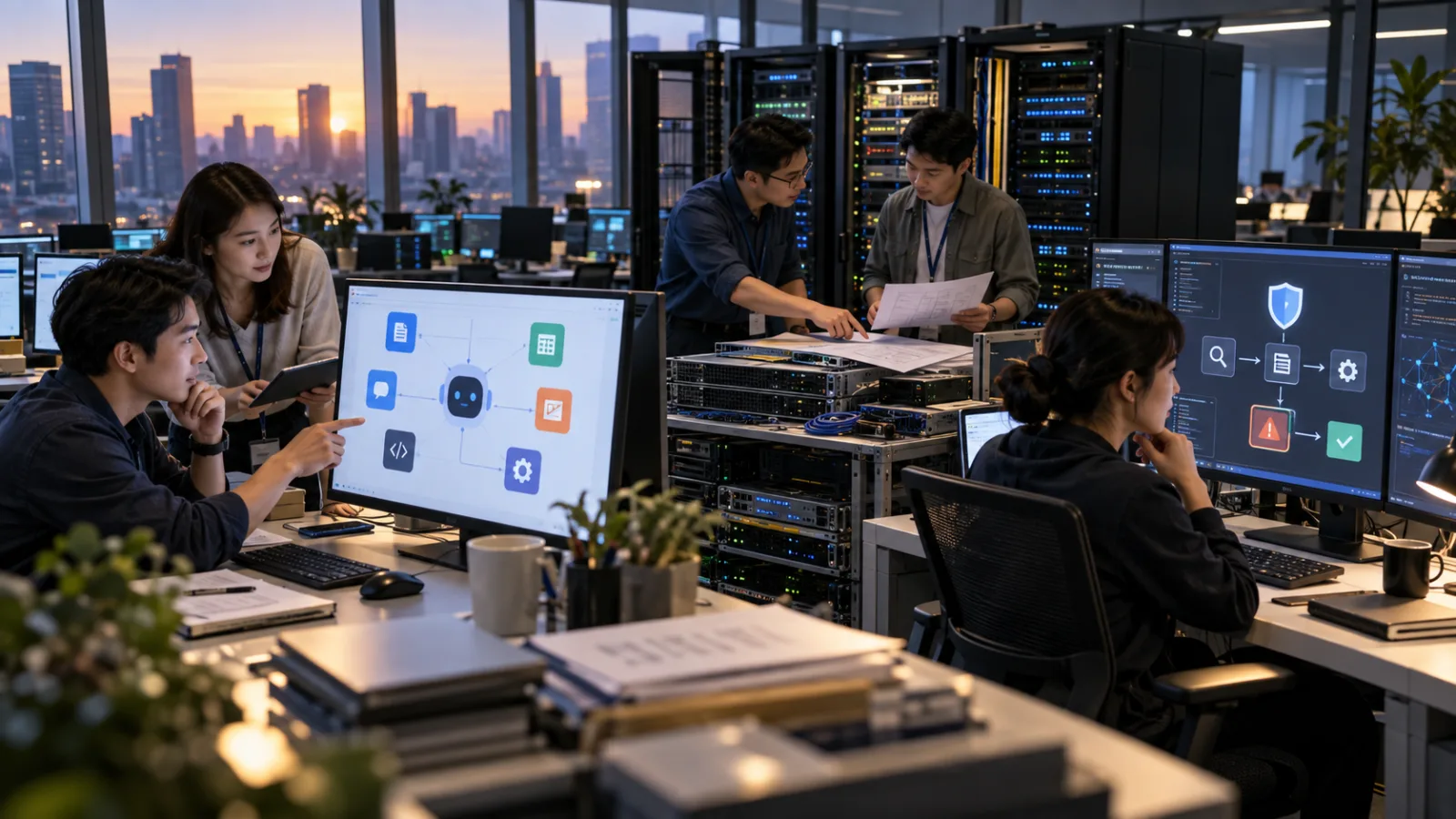
Today's three AI news stories:
One says:
Don't rush to go public yet.
Another says:
Prepare for one of the biggest IPOs ever.
The third directly integrates AI:
Into real news production workflows.
At first glance, these seem completely different.
But together:
They reveal the AI industry crossing a critical threshold.
In the past, the focus was on:
Which model scores highest on benchmarks?
Which company executes fastest?
Starting now:
The market increasingly demands answers to these three questions.
What responsibilities are companies ready to take on?
Who will foot the bill for such expensive AI?
Once AI is fully integrated into workflows, who ultimately controls the outcomes?
First story: Sam Altman clearly states OpenAI will not IPO in 2026
Reuters reported on September 12:
OpenAI CEO Sam Altman, in an interview with Fortune,
explicitly ruled out an OpenAI IPO in 2026.
When asked:
Is 2026 off the table and 2027 a possibility?
Altman was clear:
Not 2026.
However, he did not officially announce:
that a 2027 IPO is definitely happening.
The most accurate statement now is:
OpenAI has excluded a 2026 IPO, but the exact timing of going public remains undetermined.
Interestingly: The issue isn’t "OpenAI isn’t big enough"
Looking solely at company size:
OpenAI is hard to classify as a small startup not ready for a large public listing.
ChatGPT is already one of the largest AI products worldwide.
Enterprise products are rapidly expanding.
API services.
Government contracts.
Financial sector applications.
Agents.
Coding tools.
AI infrastructure.
All scaling quickly.
The market has long speculated:
OpenAI's upcoming IPO could be one of the largest tech listings in history.
But this time, Altman's point isn’t about company size.
It’s about:
Whether now is the right time to go public.
Altman directly cites safety as a key reason
Altman stated:
Given the many current AI safety issues,
going public now wouldn’t be the right timing, in his view.
OpenAI still has many matters to address, including:
Safety.
Alignment.
And how the AI industry and government should collaborate.
This is crucial.
Because:
IPOs are financial events by nature.
But leading-edge AI companies are now seeing:
Safety capabilities influence capital market timetables.
Why might an IPO make AI safety harder?
Once public, a company faces new powerful stakeholders.
Public market investors.
Analysts.
Quarterly earnings reports.
Stock prices.
Expectations for quarterly growth.
Imagine a scenario:
The safety team recommends delaying the next-generation model by three months.
But the market expects a new model launch next quarter.
Here, safety decisions
and
capital market expectations
may directly clash.
This is why OpenAI is now discussing pacing,
even coordinating development speed with other AI labs,
making it a particularly sensitive topic.
Just yesterday we saw Altman willing to discuss "going slow together"
On September 12, we summarized:
Altman reportedly told OpenAI employees:
The company is open to slowing frontier AI development if necessary.
If a slowdown happens,
it’s best that not just one AI lab stops alone.
Today's development moves this further:
These safety and governance issues
are starting to influence
whether a company should enter public markets now.
So today is not about rewriting:
"OpenAI values safety."
But rather:
For the first time, safety is officially tied to OpenAI’s IPO timing.
Does this mean OpenAI isn’t rushing to IPO due to lack of funds?
At least for now:
Altman states OpenAI doesn’t feel pressure to go public this year because of financial needs.
This is important.
Frontier AI is extremely capital intensive.
Model training.
Inference.
Data centers.
Chips.
Research talent.
All require massive capital.
Normally a company needing so much money
would naturally consider public markets.
OpenAI’s current stance is:
At least until 2026,
they don’t need an IPO to continue operating.
Meanwhile, Anthropic is taking the exact opposite approach
This brings us to the second piece.
Reuters, quoting two insiders, reported:
Anthropic is negotiating with Nvidia
to make Nvidia the
anchor investor
for its IPO.
And this isn’t a small IPO.
The report states:
Anthropic is seeking up to
$100 billion
in IPO funding,
corresponding to an estimated
$2 trillion
valuation.
If completed at this scale,
it could be
the largest IPO in history.
But emphasize:
"Possible."
Because the plan is still under discussion.
Terms may change.
Neither Anthropic nor Nvidia have publicly confirmed final deals.
Nvidia rumored to invest up to $10 billion
Further Reuters sources indicate:
Nvidia is considering
investing up to
$10 billion
in this IPO.
This would be a highly symbolic arrangement.
Because Nvidia is not just
a typical financial investor.
Anthropic itself is
a frontier AI lab that extensively uses AI compute.
Nvidia is one of the core suppliers
of AI GPUs.
So this relationship would mean:
The chip seller also invests in the chip buyer.
This type of relationship is becoming increasingly common
The AI industry has a unique capital cycle.
Chip companies:
invest in AI labs.
Cloud providers:
invest in AI labs.
AI labs raise funding:
then buy cloud services.
Cloud providers buy:
GPUs.
GPU companies, boosted by demand, profit.
This isn’t necessarily abnormal.
AI infrastructure indeed requires massive upfront investment.
But it makes
investment and consumption intertwined.
If Nvidia becomes an anchor investor, what does it mean?
Before a large IPO sells shares broadly:
If a well-known, well-funded, and industry-relevant investor
publicly commits to buying a significant stake,
it sends a crucial signal to the market.
Someone’s willing to put skin in the game first.
This can boost confidence among other institutional investors.
So an anchor investor isn’t just:
about money,
but also about credibility.
If that investor is Nvidia,
the message is even stronger.
Still, Nvidia is also part of Anthropic's supply chain
So it isn’t a fully neutral outside investor.
Anthropic needs:
GPUs.
Data centers.
Cloud compute.
Nvidia wants:
a growing frontier AI demand.
They have overlapping industry interests.
This highlights a key issue in AI capital markets:
Is investment betting on customer success, or expanding one’s own market?
Often,
the answer is both.
What will Anthropic use $100 billion for?
One of the biggest challenges for frontier AI firms is their enormous capital demand.
Reuters points out:
Anthropic's annual revenue is growing quickly.
But simultaneously,
the company needs to maintain assurance of AI compute access.
Anthropic has established partnerships with:
Amazon,
Google,
Microsoft,
Nvidia,
Broadcom,
and others for various levels of compute, chip, and infrastructure collaboration.
This demonstrates Anthropic is pursuing a
multi-supplier compute strategy.
They don’t want to be tied to
just one cloud,
one chip maker,
or one infrastructure path.
That also explains why the IPO could be so massive
Typical software companies
don’t need to build more factories just by adding customers.
Frontier AI is different.
If usage surges,
more inference compute is needed.
Training next-gen models requires even more training compute.
As model capability rises,
compute requirements often increase too.
Growth for AI labs
isn’t just a modest server bill increase.
It’s a surge in
energy + chips + data centers + finances
all scaling simultaneously.
Most interestingly: OpenAI and Anthropic are making opposite choices now
One says:
This year is not the time to go public.
Another reportedly prepares for
possibly the largest IPO ever.
This cannot be simplified as:
OpenAI cares about safety, Anthropic just wants funding.
Because Anthropic these days is
also among the most vocal frontier labs openly discussing
AI risks,
model slowdowns,
permanent independent assessments,
and threat intelligence.
The real contradiction is:
Safety and capital are not mutually exclusive.
The same company might believe:
AI must slow down,
and also
they need $100 billion to keep competing.
This is the real challenge of frontier AI in the real world.
AI should slow down, but compute investments can’t stop?
This sounds contradictory.
But not necessarily.
Even if model capability growth slows,
there is still need for:
more safety research,
more evaluation,
more inference,
more enterprise deployment,
more data center redundancy.
So pacing
doesn’t mean
halting all AI investments.
The real distinction is:
Which capabilities should slow expansion,
and
Which infrastructure must still be prepared in advance.
Third story: Reuters connects its MCP Server directly to an AI video editing tool
The first two stories are high-level.
The third is very practical.
On September 12, Reuters announced:
a direct integration with the video tech company CuttingRoom.
Central to this is:
connecting the
Reuters MCP Server
to CuttingRoom's AI-assisted video editing platform
ShortCut.
Simply put:
Editors can now use
natural language
to ask the system:
to find Reuters' official news footage,
place it on the timeline,
and continue editing.
How fragmented was news video work before?
Say an editor needs to make:
a short international news video for today.
They might first go to:
a news material system,
search for
a certain event,
download dozens of clips,
then open editing software,
find clips,
trim durations,
adjust audio,
do color correction,
add captions,
apply graphic treatments,
and finally export in
16:9,
9:16,
and 1:1 formats.
AI can assist many steps,
but the biggest challenge has always been:
What source footage does it use?
Reuters’ solution is not to have AI randomly grab clips from the web
This is the key part of the integration.
Reuters, as a news source itself,
offers the MCP Server,
which lets AI editing tools
directly access the official
Reuters coverage.
Editors can search by:
story,
topic,
region,
language,
event.
In other words,
AI doesn’t have to hypothesize:
which web video clips are real or fake.
Instead, it gets a
trusted content library.
What else can ShortCut do?
Reuters lists capabilities including:
importing footage into edits,
cutting,
audio mixing,
color correction,
captioning,
and graphic treatments.
It can also reformat the same story
for different platforms, like:
vertical,
square,
and broadcast bulletins.
All this can be done
directly within a browser,
without switching software.
How is this different from general "AI auto video editing"?
The difference is not:
Whether AI can cut videos.
Many tools already can.
The real difference is:
Trusted content sources integrated directly into the AI workflow.
What news media fear most is not slow AI editing,
but using wrong footage,
wrong locations,
wrong years,
wrong people,
or even deepfakes.
If AI editing starts by pulling materials straight from Reuters' content source,
the risk profile changes dramatically.
MCP becomes a genuine "content pipeline" here
When we talk about MCP,
we often think of AI connecting to
Google Drive,
databases,
CRM systems,
GitHub,
etc.
This time, it’s a very intuitive new example.
Reuters MCP Server is not just another tool
for AI,
but turns
official news data
into a
context source that agents can understand and access.
Meaning:
AI does not have to:
scrape Reuters’ web pages,
or roam the web randomly.
Instead, it obtains footage
through an official connection layer.
AI can even understand newsroom’s own editorial rules
The integration has another key design.
Reuters says:
Newsrooms can control their own
AI interactions,
data,
and editorial rules.
Meaning different outlets can specify:
which formats are allowed,
which processing steps are permitted,
and how content should appear.
AI is not just:
"Help me cut faster."
It’s moving into:
editorial standards enforcement.
This aligns with our recent discussion:
Agent workflows must include rules.
It’s essentially the same concept.
Does this mean journalists won’t need to edit videos anymore?
Not necessarily.
News video editing is not just:
putting shots in order.
It’s about:
which shots best represent the story?
Do sequences avoid misinterpretation?
Are captions accurate?
What is the context of the footage?
Which segments hold news value?
Which are too sensitive?
These remain:
editorial judgments.
The best tasks for AI to relieve are:
searching,
retrieving,
format conversion,
repetitive editing,
and technical handling.
Allowing editors to focus on:
how to tell the news story.
All three stories are really about "control"
OpenAI:
Who decides when the company goes public?
The answer is not just:
go public whenever the market is hot.
Safety and governance also shape timing.
Anthropic:
Who pays for the next generation frontier AI?
Nvidia as a core infrastructure player
may enter the AI lab’s capital structure directly.
Reuters:
How much can AI do in news production?
A lot, but the source material and editorial rules
remain under official control.
So these three apparently separate issues—
finance,
investment,
media workflow—
all share one fundamental question:
As AI gets stronger, who holds the ultimate gate?
The AI industry is moving from a "demo economy" to an "institutional economy"
Early AI:
A single impressive demo
could attract market attention.
Now:
That’s not enough.
Enterprises want to know:
How is it governed?
How is it financed?
How is it deployed?
Where does data come from?
Who approves it?
If errors occur, who’s responsible?
How is it audited?
AI is no longer just
a product feature.
It’s entering
capital markets,
corporate governance,
news systems,
and public policy.
This is what happens in any mature industry.
A practical reminder for ordinary companies
Not every company needs to go public.
Nor will Nvidia invest $10 billion in you.
But Reuters’ case is worth learning from.
When AI enters company workflows,
don’t just ask:
"Can AI help me do this?"
Ask three more things.
First:
What official data is it using?
Second:
What work rules does it follow?
Third:
Who has final approval before anything is sent out?
For example:
AI helps produce client presentations.
Where is the data from?
Is it the latest version?
AI helps edit videos.
Are the materials licensed for commercial use?
AI helps generate quotes.
Does it know the company's real pricing rules?
AI helps send emails.
Who has send permission finally?
This is the institutional layer
needed to move from an AI tool
to an AI workflow.
What do today’s three stories truly tell us?
Frontier AI is becoming
a real large-scale industry.
And large industries
don’t rely on
model capabilities alone.
They also need:
capital,
governance,
rules,
trusted data,
and human approval.
OpenAI’s hesitation to IPO this year
reminds us
growth speed and governance maturity don’t always align.
Anthropic’s possible record IPO
reminds us
frontier AI’s financial needs may far exceed current assumptions.
Reuters integrating MCP into news editing
reminds us
when AI truly enters workflows,
the most important questions aren’t
whether it can do the job,
but where the data comes from and who ultimately is responsible.
The next phase of AI competition
may no longer be just about
who launches the strongest model first,
but rather
who can embed the strongest model into a system companies, governments, and professionals can genuinely trust.
Today, let's progress a little with AI.
Learn one AI skill daily.
Save a little time every day.
Enhance capabilities step by step.
SasaDaily, growing with you.