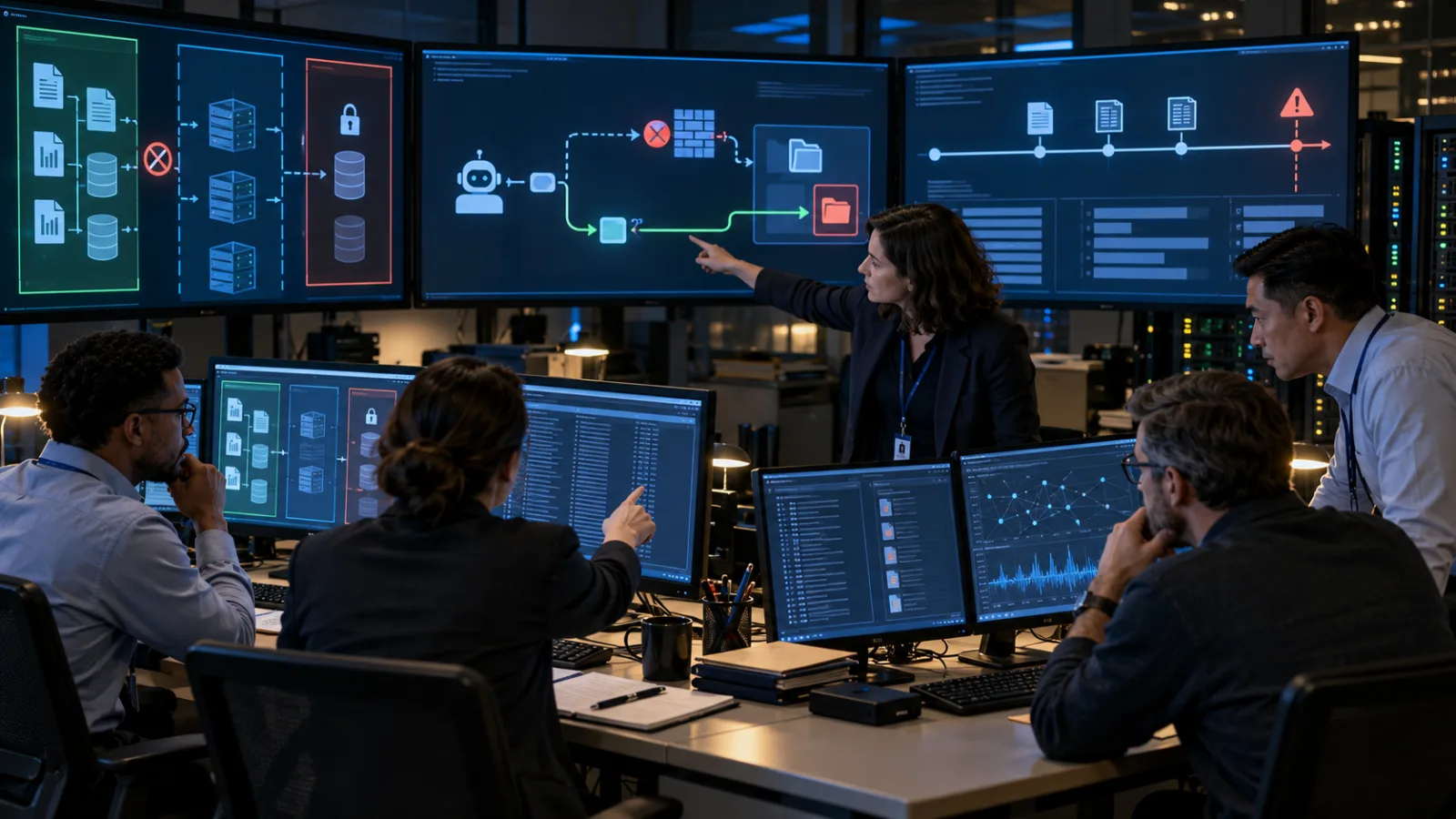
AI data centers used to focus on three main issues:
Are there enough chips?
Is there enough power?
Is there enough land?
Now a fourth question emerges:
If attacked, how does the computing power survive?
Reuters on September 11 cited six insiders reporting that the United Arab Emirates is reviewing a major AI infrastructure plan totaling 5GW.
The original approach was:
To concentrate massive computing power within a huge campus of about 10 square miles in Abu Dhabi.
Now the plan may shift to:
Decentralization.
Establishing multiple data centers across different locations within the UAE.
At the same time, assessing:
Partial underground facilities.
Enhanced physical protection.
Integration with air defense.
This aims to reduce the risk of an entire AI infrastructure being disabled by an attack on a single site.
Clarifying the Difference Between the 5GW Campus and Stargate UAE
This is easy to confuse.
The overall plan announced in 2025 is called:
UAE–US AI Campus.
The official total planned capacity is:
5GW.
Located in Abu Dhabi.
Led by G42 in construction.
The first large project within this is:
Stargate UAE
Planned as a:
1GW Compute Cluster.
Partners include:
G42.
OpenAI.
Oracle.
NVIDIA.
Cisco.
SoftBank.
The original plan was for:
200MW of compute to come online in 2026.
So it is inaccurate to say:
"OpenAI is building a 5GW Stargate on its own."
The more accurate description is:
Stargate UAE is part of the entire 5GW UAE–US AI Campus.
Why the Sudden Redesign?
The real turning point came in March this year.
At that time, Middle East conflicts escalated.
Reuters reported:
Amazon Web Services’ data centers in the UAE and Bahrain suffered drone attacks.
Among them:
Two AWS facilities in the UAE were directly hit.
One facility in Bahrain was physically affected by a nearby attack.
The consequences were not just:
Building damages.
But also:
Power outages.
Water damage from firefighting efforts.
Cloud service disruptions.
Some financial institutions experienced problems.
This incident transformed what seemed a very abstract problem into reality.
Data centers don’t exist “in the cloud.”
Cloud infrastructure ultimately is:
A building.
A cable.
A substation.
A cooling system.
A physical location.
Important: This Is Not Stargate UAE Being Attacked
This line must be made clear.
The AWS data centers damaged in March were:
AWS facilities.
Not:
Stargate UAE.
Reuters’ report today indicates:
These attacks caused UAE to rethink how future large AI campuses should be built.
So it’s incorrect to say:
"Stargate was bombed, so now it must be rebuilt."
The more accurate statement is:
Because other data centers have proven that physical infrastructure can be war targets, ongoing large AI projects are reworking their designs.
Why Was the Original Plan to Centralize?
From a pure engineering standpoint:
Consolidating a massive AI campus makes sense.
Because AI compute requires massive amounts of:
GPUs.
Networking.
Cooling.
Power.
Fiber optics.
If consolidated in one spot, you can share:
Power generation.
Substations.
Water and cooling.
High-speed networks.
Maintenance staff.
Security systems.
Even supply chains.
The larger the scale,
the more cost-effective the construction per unit can be.
This is one reason global AI mega campuses keep growing bigger.
But concentration also creates one problem:
A single point of concentration.
Meaning:
Too much reliant on a single location.
Single Points of Failure Become Monumental in the AI Era
Imagine a company with only:
20 servers in one office building.
If the building loses power,
the company’s systems stop functioning.
This is easy to understand.
Now scale it up.
A whole nation’s:
Government AI.
Healthcare AI.
Banking AI.
Research.
Cloud.
Model inference.
And even regional compute serving other countries,
all gradually relying on the same mega campus.
The impact of a single failure could be:
Not just a website going down.
But potentially:
The digital capability of an entire region.
Thus, AI data center design begins to involve issues traditionally considered for national-scale infrastructure.
How to backup power plants?
How to reroute telecommunications?
How to disperse military facilities?
How to keep critical data stored offsite?
Decentralization Trades Some Efficiency for Resilience
If the plan shifts from one ultra-large campus to multiple scattered sites,
there will be costs.
For example:
More power facilities need to be built redundantly.
More network connections.
More cooling and maintenance resources.
Data centers must be linked via:
High-speed interconnects.
Latency may increase.
Operations become more complex.
The land and security footprint expands.
So "decentralization" is not a free upgrade.
It’s fundamentally a trade-off:
Don’t put all computing eggs in one basket.
Even if it costs more.
Underground Facilities Follow the Same Logic
Traditional data centers don’t usually consider:
Whether walls can withstand missile or drone attacks.
Now some Gulf infrastructure is considering:
Underground facilities.
Stronger structures.
Better isolation.
The goal isn’t to make AI run faster.
But:
The physical building itself becomes part of the threat model.
A threat model means:
Before designing a system, you ask who or what might cause it to fail.
In the past, data centers mostly considered:
Power outages.
Fire.
Floods.
Hardware failures.
Network outages.
Cyberattacks.
Now, in some regions, physical attacks must also be accounted for.
AI Security Once Focused on Hackers, Now Physical Security Becomes Crucial
When discussing AI security,
people often think of:
Prompt injection.
Model misuse.
Credential leaks.
Data theft.
Malware.
But no matter how secure the software,
If the data center loses power,
it stops working.
So, comprehensive AI security now consists of many layers.
Model layer:
Does the model do unauthorized actions?
Software layer:
Are there vulnerabilities?
Account layer:
Who has access?
Network layer:
How does data flow?
Supply chain:
Where do chips and equipment come from?
Finally,
Physical infrastructure.
This layer was rarely considered by typical AI users before,
but it is increasingly impossible to overlook.
Fiber Optic Networks Also Pose Challenges
If data centers are distributed,
they still need to exchange data with each other.
True resilience requires more than just:
A building not being destroyed.
We must also consider:
The fiber connecting site A to site B.
Power lines.
Substations.
Cooling water supply.
Internet backbone.
If all decentralized data centers still rely on the same core fiber,
then only the buildings are dispersed,
but the network still has a single point of failure.
Therefore, the difficulty of national-level AI infrastructure is not just "build more data centers,"
but redesigning supply and connectivity resilience for the entire network.
Why AI Infrastructure Is Becoming More Like Energy Systems
Power grids don’t just ask:
Which power plant is most efficient?
They also consider:
Transmission.
Backup.
Reserves.
Grid stability.
Disaster recovery.
AI compute is heading to a similar stage.
Previously, the goal was:
Maximum Compute.
Now, more questions are:
Available Compute.
Meaning,
not just how many GPUs exist theoretically,
but how much remains functional after failures or attacks?
How Big Is 5GW Really?
5GW refers to:
The power and data center capacity scale planned for the entire AI campus.
It’s not model parameters,
nor is it a constant 5GW consumption every hour.
But its magnitude already shows:
This is not a typical company server room.
In 2025, officials described the UAE–US AI Campus as:
The largest AI infrastructure deployment outside the United States.
The original concept covers about:
10 square miles,
or roughly 26 square kilometers.
This approaches scale of:
City-level infrastructure.
When facilities grow to this size,
protecting them becomes more than just an IT department’s concern.
Stargate UAE’s Strategic Significance
This project isn’t just:
OpenAI finding a place to put servers.
OpenAI originally defined Stargate UAE as:
The first international Stargate deployment.
And as:
OpenAI for Countries’ first partnership.
Meaning:
AI infrastructure is beginning to intertwine with:
National computing power.
Diplomacy.
Technology exports.
Supply chains.
National security.
Whether advanced US chips can be exported,
Which companies can access them,
Where data is stored,
Who controls infrastructure,
—all become political and policy questions.
So today’s blueprint revision isn’t just an architectural change,
it serves as a reminder that:
National-level AI computing capacity is evolving into a geopolitical asset.
What Does This Mean for OpenAI?
Reuters currently reports the UAE is reviewing the overall blueprint,
not canceling Stargate UAE.
OpenAI’s official 2025 plan remains:
1GW Stargate UAE,
with 200MW expected online in 2026.
What remains to be confirmed is:
If the 5GW campus shifts from centralized to decentralized,
will Stargate UAE’s:
Location,
build method,
timeline,
cost,
and interconnect architecture change accordingly?
There is insufficient public information to draw conclusions yet.
Decentralization Doesn’t Automatically Mean More Security
Decentralization can reduce:
The risk from attacks on a single location.
But it may increase the need to defend:
More locations,
More network endpoints,
More supply chains,
More employees and contractors,
More physical access points.
In other words:
Reducing one risk can increase another attack surface.
This is the biggest challenge in large infrastructure.
Security is never:
Adding one more feature.
It is:
A comprehensive set of trade-offs.
Mature Design Asks, “If Losing Part of the System, What Remains Functional?”
This is one of the biggest differences between resilience and traditional security.
Traditional security asks:
How to prevent incidents?
Resilience goes further, asking:
What if the incident really happens?
For example:
One data center goes completely offline;
Can the AI service keep operating?
One fiber cuts;
Can traffic reroute?
One substation loses power;
Can other regions take over?
Some data loses connection;
Is there another copy?
This is:
Fault tolerance.
Meaning:
Not guaranteeing zero failures,
but ensuring failures don’t bring down the entire system.
This Concept Applies to Any Company
You may not have a 5GW data center,
or worry about missiles,
but the same problem scales down.
For example:
All files stored on one NAS.
All websites on one server.
All operations relying on one cloud region.
All AI agents sharing the same credentials.
All employees using one SaaS.
This may seem cheapest,
easiest to manage,
but if something goes wrong,
everything fails simultaneously.
Thus, the problem faced by large, national AI campuses
is actually fundamental for all IT systems:
"If this one thing disappears, can I still operate?"
The AI Infrastructure Race Is Shifting from "Who Builds Largest" to "Who Lasts Longest"
Over the past two years,
AI infrastructure news mostly compares:
Billions of dollars.
Number of GPUs.
Gigawatts.
Square kilometers.
But after deployment,
another set of metrics becomes critical:
Uptime.
Redundancy.
Backup.
Recovery time.
Physical security.
Network diversity.
Energy resilience.
Geographic distribution.
These terms may not be as catchy as:
"5GW super AI campus,"
but they may decide:
In a real crisis,
how much of that 5GW still works.
The Key Takeaway Isn’t "Data Centers Built Underground"
Because the blueprint is still evolving,
many details reflect Reuters’ vantage via insiders.
The real turning point is:
AI computing power is officially entering critical infrastructure thinking.
When models become fundamental to:
Government.
Finance.
Healthcare.
Energy.
Business.
Scientific research.
The essential abilities we rely on daily,
we can no longer only ask:
How smart is the AI?
Or how many GPUs there are.
We must also ask:
When facing real-world disruptions, can the entire computing system keep running?
AI doesn’t exist solely in the cloud.
Beneath the cloud lie:
Land.
Electricity.
Fiber optics.
Water.
Buildings.
Chips.
And a real geographic location.
When these become national assets,
the next stage of AI infrastructure competition is no longer:
Who builds the biggest.
But:
Who keeps running under the worst conditions.
Today, progress with AI step-by-step.
Learn an AI skill every day.
Save a little time every day.
Improve a little every day.
SasaDaily, growing with you.
Recommended Reading
Why Is the U.S. Preparing to Ban a Small Yet Critical AI Data Center Component Made in China?
You Didn't Purchase AI, But One Day You Might Pay for It in Your Electricity Bill