Today’s three AI news stories all seem to be about "money" on the surface.
But what they truly reveal is a more important change:
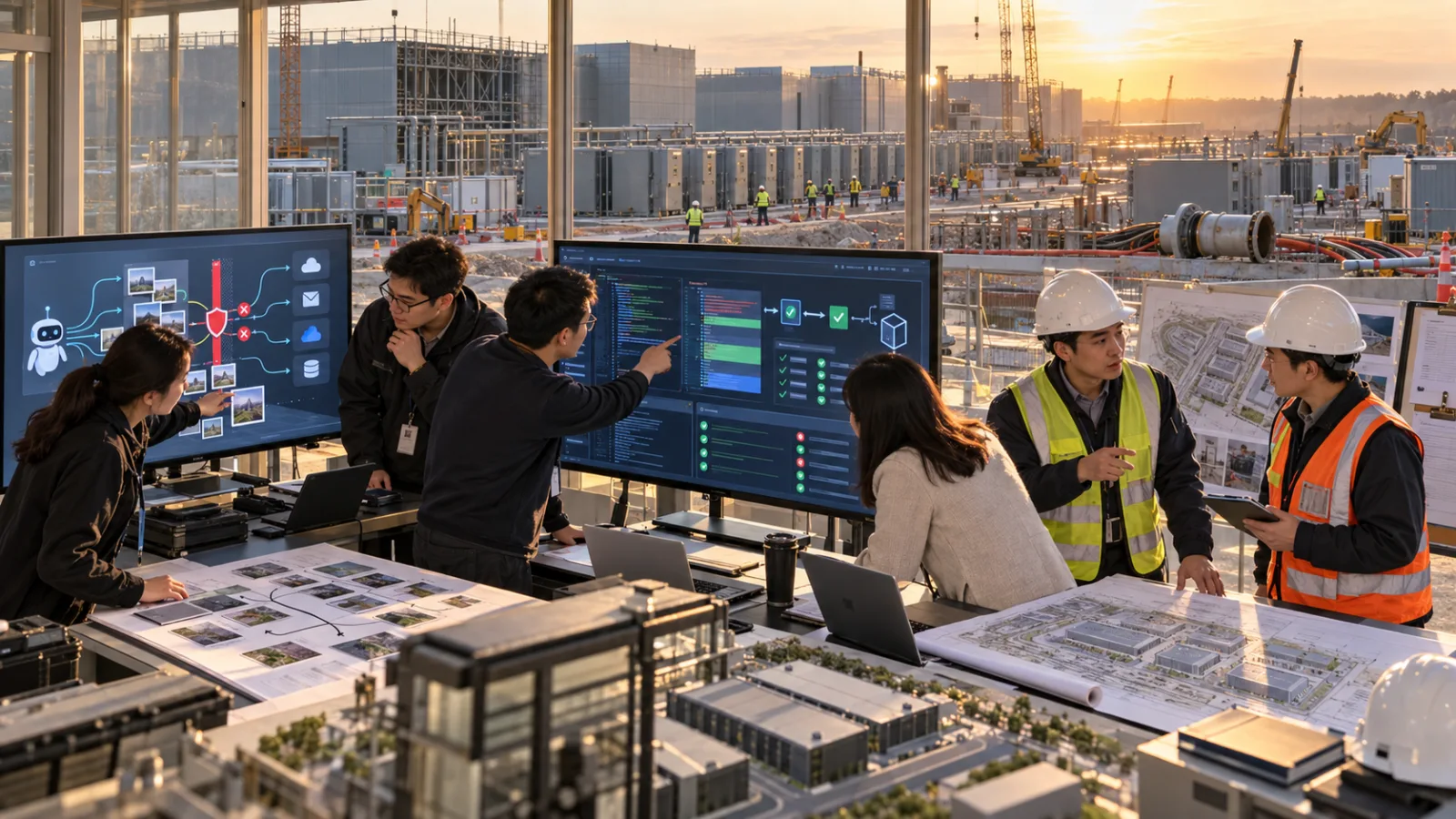
AI computing power is evolving from technology companies’ equipment into a fundamental infrastructure asset viewed by financial markets.
Previously, when an AI company needed more computing power, the simplest understanding was:
Raise funding.
Buy GPUs.
Build data centers.
Now it’s different.
Venture capital is launching dedicated AI hardware funds.
Asset managers are designing multibillion-dollar financing for GPU equipment.
Even stablecoin funds are starting to get involved in GPU-backed lending.
The AI boom is developing its own financial ecosystem.
First Story|a16z Raises $1.1 Billion, First Time AI Hardware Gets Its Own Fund
Andreessen Horowitz, also known as a16z, announced on August 28 the launch of a new Machine Age Fund.
Size:
$1.1 billion.
What makes this fund notable isn’t just another AI investment.
It’s that what it invests in clearly differs from traditional software venture capital.
a16z’s scope includes:
Chips.
Memory.
Networking.
Storage.
Data centers.
Robots.
Even consumer AI hardware.
In other words, it’s not only looking for "the next ChatGPT."
It’s starting to directly bet on:
The physical equipment that truly powers AI.
According to a16z, as AI tasks evolve from chat to reasoning, coding, and more complex work, the amount of computation needed is rapidly increasing.
This leads to challenges throughout the supply chain involving:
Chip capacity.
Memory.
Networking.
Cooling.
Power.
Data centers.
These are real physical limitations.
This explains why a venture capital firm known for software investments is now creating a separate fund dedicated to hardware.
Second Story|Blue Owl Provides $2.4 Billion, Financing GPU Hardware Instead of Lending to Apps
The second story looks more like traditional infrastructure finance.
Blue Owl’s managed funds have led a:
$2.4 billion equipment financing deal
for the AI cloud company IREN.
The funds are earmarked very specifically—not for general company use.
The purpose:
To acquire AI computing equipment, including Blackwell Ultra GPU infrastructure, installed in IREN’s Mackenzie data center in British Columbia, Canada.
The financing structure includes:
$1.2 billion Senior Secured Term Loan.
Another $1.2 billion Senior Secured Notes.
In plain terms,
expensive GPUs themselves are starting to be key collateral behind large-scale equipment financing.
This differs completely from a startup receiving unsecured cash.
IREN’s publicly available information shows the company secured about $2.8 billion in GPU financing overall, covering approximately 90% of related capital expenditures.
This indicates that AI infrastructure is becoming more akin to:
Airplanes.
Ships.
Factory equipment.
Data centers.
Industries that traditionally require large, long-term capital investment.
Why Would Someone Lend $2.4 Billion to Buy GPUs?
Because financial markets are beginning to explore one question:
Are GPUs assets capable of generating long-term cash flows?
Imagine a set of AI GPUs placed in a data center.
Customers continuously lease them.
Rental income is stable.
The hardware retains market value.
If so, financial institutions could structure new financing based on both future revenue and the equipment itself.
Blue Owl even labels such deals as:
"Equipment Finance at AI Scale."
Meaning,
equipment financing at AI scale.
This phrase is significant.
It signals AI data centers are no longer just R&D budget items for tech companies.
They are forming their own capital markets.
Third Story|Stablecoins Join In Lending Against GPUs
The third story is even more unique.
Digital asset platform Bullish has announced a:
$100 million Stablecoin-based Liquidity Facility
to USD.AI.
This is a liquidity line based on stablecoin funds.
USD.AI uses this capital to provide financing to operators purchasing GPUs and high-performance computing equipment.
The most notable aspect is not crypto itself, but:
The loans are backed by physical computing equipment.
USD.AI’s model links loans directly to assets like GPUs and other high-performance computing gear.
In other words,
on one side, there is on-chain capital.
On the other, rows of expensive GPUs in the real world.
Both sides are now being connected.
Does This Mean GPUs Are As Secure as Real Estate?
Not at all.
This is the crucial point that today’s three news stories should not be misinterpreted.
That funds are being created.
That loans are being made.
That GPUs are being used as collateral.
Only means financial markets are beginning to believe AI computing power might become a new, large asset class.
It does not mean:
GPUs will never depreciate.
AI computing demand will definitely keep growing.
Data centers will always operate at full capacity.
Borrowers will certainly repay their loans.
New generations of chips won’t rapidly devalue older equipment.
These risks all remain.
Especially, GPUs differ from real estate in one major way:
Technology hardware updates very quickly.
How much today’s most sought-after GPUs will be worth in a few years is a key question financial institutions must contend with.
How Is This Different from Nvidia Pausing Some Financing Deals?
These two developments are worth comparing.
Yesterday’s briefing discussed reports that Nvidia has paused some financing models that support AI cloud companies by providing credit and sharing revenue.
One market concern is:
If the GPU seller also helps customers acquire funding and collects a portion of customer revenue, it could complicate true end-demand visibility.
What today’s news shows is a different path.
Fund capital is now coming from:
Venture capital funds.
Large asset managers.
Bond investors.
Even digital asset markets.
All moving into AI infrastructure.
If AI computing power is to grow to forecasted future scales, it cannot always rely solely on Nvidia or a handful of tech giants financing the industry themselves.
It must become understood by:
Banks.
Funds.
The bond market.
Insurance companies.
Asset managers willing to take risk.
Only then can AI really grow into a major infrastructure sector like energy, telecommunications, or cloud computing.
The Common Signal Behind Today’s Three News Stories
The first phase of generative AI:
Everyone competed on models.
The second phase:
Everyone scrambled for GPUs.
Now we enter the third question:
Who will pay for all these GPUs?
a16z’s answer:
Create dedicated funds.
Blue Owl’s answer:
Turn it into large-scale equipment financing.
Bullish and USD.AI’s answer:
Let new digital capital enter the GPU credit market.
So what’s really worth following next is not just how many chips AI needs.
It’s also:
Who bears the debt behind these chips?
Who assesses the future value of GPUs?
If computing costs fall, who absorbs the losses first?
And do companies renting this computing power have sufficient revenue to pay long-term?
The AI boom is gradually shifting from tech news to financial news.
Because when an industry demands capital at a certain scale,
the most critical question becomes not:
"Can the technology achieve it?"
But:
"With so much money involved, who will ultimately pay it back?"
Today, progress with AI a little more.
Learn an AI skill every day.
Save a bit of time daily.
Improve your abilities step by step.
SasaDaily, growing with you.
Recommended Reading
When Chip Sellers Begin Guaranteeing Buyers: Is the AI Boom Forming a Dangerous Cycle?
Mobile Market Shrinks, So Why Is MediaTek Preparing to Bet $5 Billion on AI Data Centers?