If you only read the headline today,
this could easily be understood as:
“Someone sold Nvidia chips to China again.”
But the case announced today by Taiwan’s Keelung District Prosecutors
has much deeper significance.
Because this is not about:
a single GPU sneaked into a suitcase.
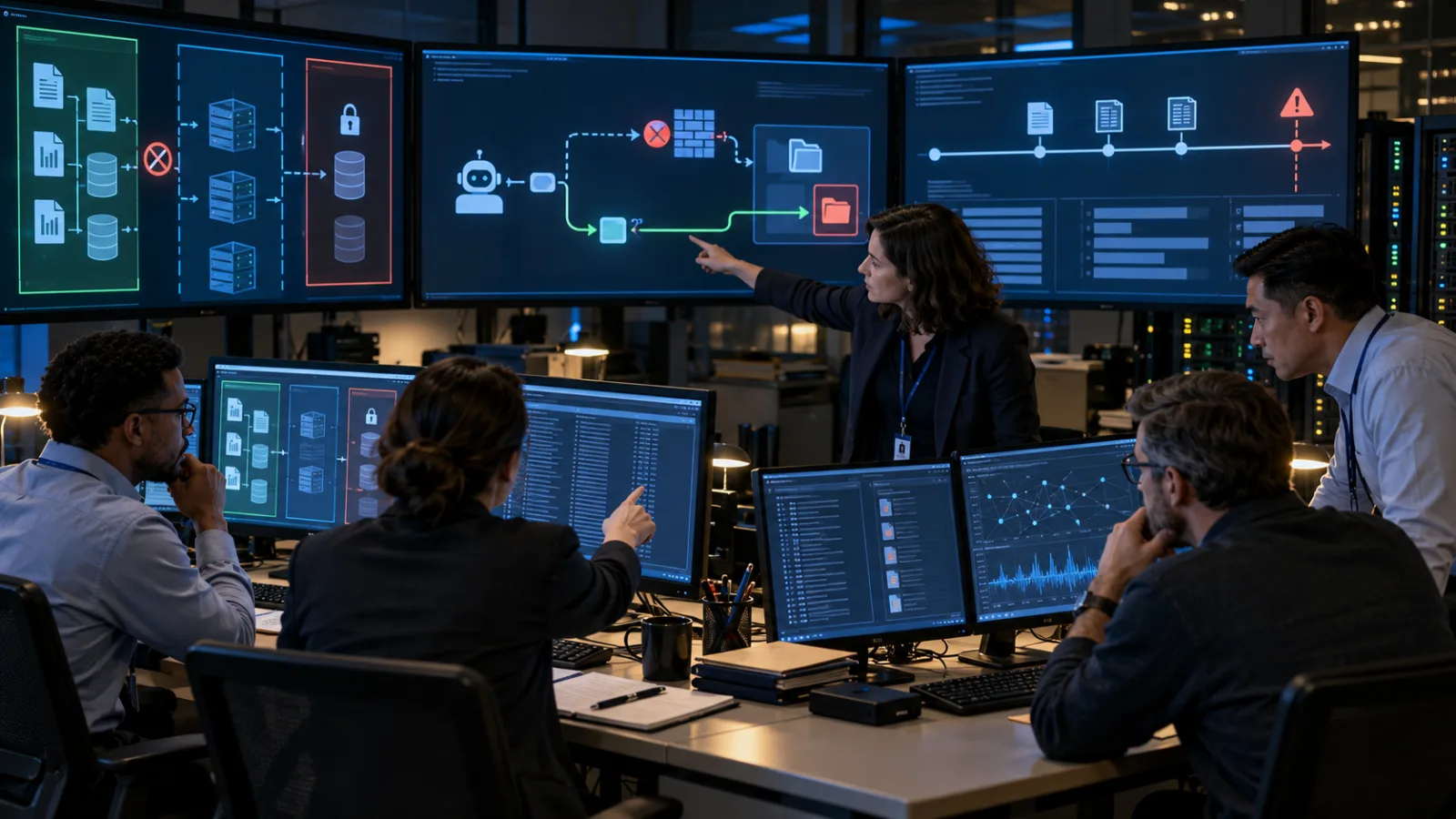
It’s about an entire procurement process involving high-end AI servers that include:
whitelists,
end-user declarations,
equipment usage documentation,
data center audits,
dealer networks,
manufacturer internal controls,
and customs paperwork,
yet prosecutors still allege these measures were circumvented.
This shows that AI chip export controls have entered a new phase:
It’s no longer just about “Can this chip be sold?” but also about “Who is actually using it, where is it located, and whether it’s been resold.”
What exactly happened today?
The Keelung Prosecutor’s Office today announced
the conclusion of an investigation involving high-end AI servers:
9 people were formally charged.
According to Reuters, the accused include:
employees from Nvidia’s Taiwan office,
employees from Super Micro’s Taiwan office,
and individuals from related dealers and businesses.
It must be clearly stated:
an indictment does not mean a conviction.
The case must still go through court proceedings.
The whole case started with 130 B300 AI servers
According to prosecutors,
the procurement involved:
130 B300 high-end AI servers.
The stated intended use was:
equipment would be installed and operated in:
data centers located in Taiwan.
In other words, on paper,
the servers were supposed to remain in Taiwan.
The problem lies in “where they ultimately ended up”
Prosecutors allege that relevant parties provided:
false end-user information
and misleading equipment usage documents,
leading the manufacturer to believe
that these high-end devices would stay in Taiwan.
But after receiving the equipment,
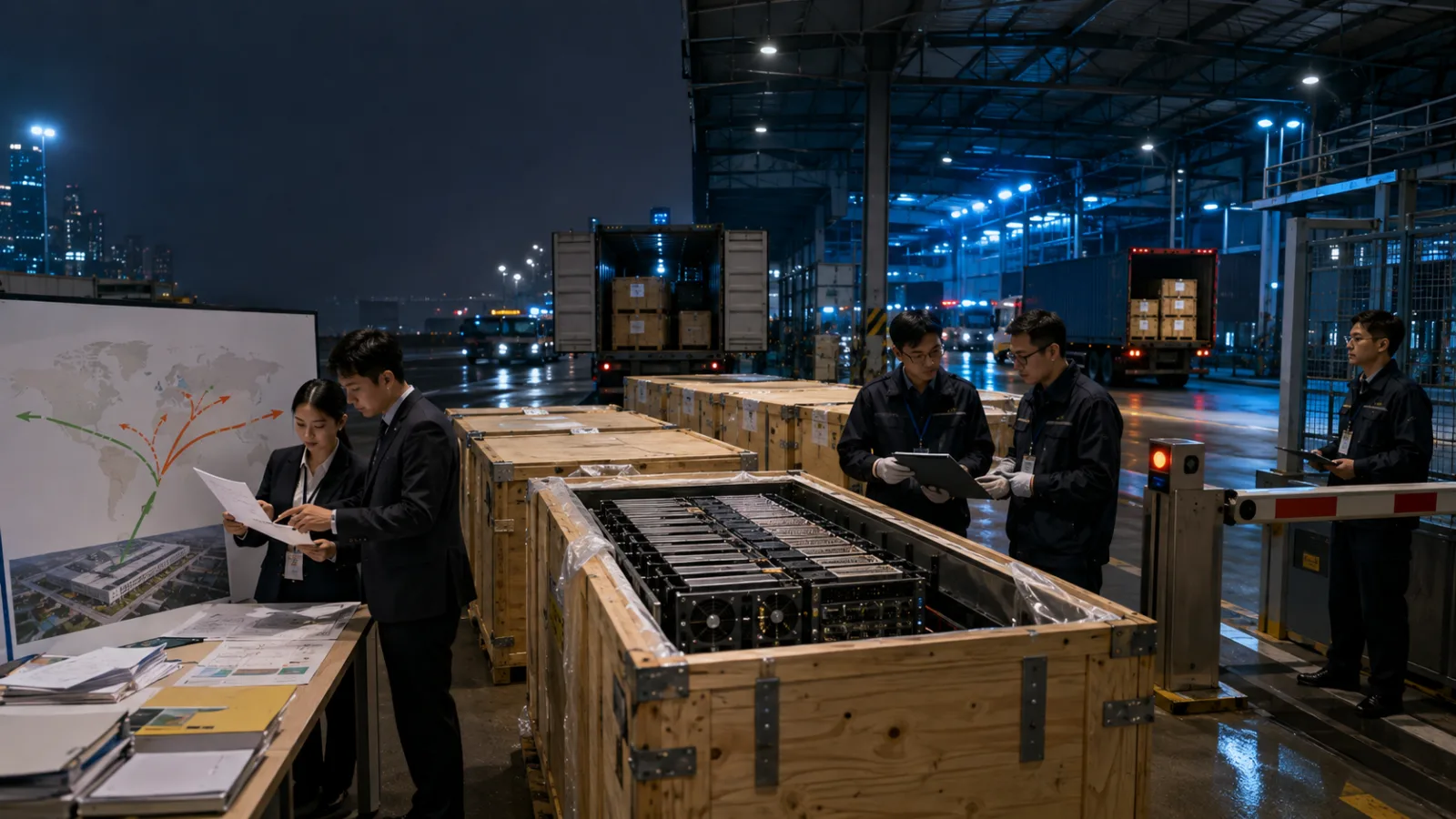
74 units
were later exported and delivered to customers in China.
There were multiple routes involved.
Some shipments went directly to China,
while others were transshipped via
Indonesia,
Japan,
and Hong Kong.
The remaining 56 units did not all leave Taiwan
Additionally,
56 units
were originally prepared for export to a Japanese company.
But Taiwan customs detected
irregularities in the documentation and circumstances.
As a result,
these units were blocked from export.
Thus, the total of 130 units breaks down simply into:
74 units exported,
56 units intercepted.
Why does one server require so many checks?
Because this is not an ordinary office server.
The B300 belongs to high-end AI computing hardware.
The chips inside these devices fall under
U.S. export restrictions on advanced semiconductors to China.
Therefore, normal procurement verification involves confirming not only:
“Who is paying?”
but also:
Who is the final user?
Where will it be located?
What will it be used for?
Which data center will host it?
Has it been resold?
This is why AI export controls increasingly resemble “tracking the entire supply chain”
Previously, chip controls might have been seen as simply:
The U.S. government lists certain chips,
“This one: Allowed for export.”
“That one: Prohibited.”
But the reality is far more complex.
An AI server may go through:
the chip company,
server manufacturer,
agent,
distributor,
data center,
logistics company,
exporter,
and finally end customer.
If only the initial transaction is monitored,
any subsequent resale can circumvent rules.
The most important phrase now: End User
Meaning:
the final user.
For example, a company buying equipment in Taiwan
does not necessarily mean the equipment is actually used in Taiwan.
A company receiving goods in Japan
does not guarantee the equipment remains in Japan.
Thus, high-tech export controls increasingly ask:
Who truly uses the equipment in the end?
The second key issue: End Use
Meaning:
What is it ultimately used for?
This explains why ordering high-end AI equipment often requires
more than just a company name,
but also the stated purpose,
the data center location,
installation plans,
and possibly on-site inspections.
Because one server could be used for
commercial AI,
scientific research,
or highly sensitive computing tasks,
knowing only
“who bought it”
is insufficient.
What really stands out in this case is not “transshipment”
but
the documentation.
A core allegation from prosecutors is
that the end-user and equipment usage information was falsified.
Why is this so important?
Because corporate internal controls rarely have the capacity to physically track shipments continuously.
Instead, they rely on
declarations,
contracts,
documentation,
audits,
and system data
to decide if a transaction can proceed.
If the initial information is false,
the entire compliance judgment is based on a faulty premise.
This is a new cybersecurity challenge for AI supply chains
Previously, “AI security” mostly referred to issues like:
model boundary violations,
data leaks,
prompt injection,
or agent permissions.
But AI infrastructure has another form of security:
Where does the hardware ultimately end up?
If a high-end AI server ends up in a restricted location,
it can provide
massive model training,
inference,
and high-performance computing
capabilities.
Thus, the supply chain itself
is becoming part of AI security.
Were Nvidia or Super Micro charged?
No.
The indictment today targets:
individuals.
Reuters reported that among the accused are one Nvidia Taiwan employee and two Super Micro Taiwan employees.
This should not be misconstrued as:
“Nvidia indicted by Taiwan.”
or
“Super Micro is guilty.”
At the time of Reuters’ report, both companies had not commented.
Criminal liability of a company and its individual employees
must be distinguished.
Is Taiwan enforcing U.S. export control laws?
This question cannot be simplified.
The U.S. imposes export restrictions on advanced chips going to China,
which underlies the stringent internal controls on these products.
But the charges filed by Taiwan prosecutors actually include:
breech of trust,
forgery,
and certain financial crimes.
So it’s inaccurate to say:
“Taiwan courts indicted 9 people under U.S. export control laws.”
Why does U.S. export control repeatedly come up in this case?
Because it explains
why these high-end products have such strict corporate internal controls.
Reuters quotes prosecutors saying the accused are alleged to have knowingly evaded
Nvidia and Super Micro’s rigorous export compliance procedures.
Therefore, U.S. rules are a key background to the case,
but Taiwan prosecutors chose specific legal charges
which should not be conflated.
This also shows “compliance” is no longer just the legal department’s responsibility
Assuming you run a tech company,
export compliance might have previously been seen as
the responsibility of:
legal,
customs,
and logistics.
But cases like this show that those handling critical information may include
sales,
distributors,
partners,
procurement,
data centers,
logistics,
and technical staff.
Each layer could be
a control point,
or a vulnerability.
Whitelists are not a “permanent pass”
High-end AI hardware procurement often requires
client vetting,
and placement on a list of approved trading partners.
But mature compliance doesn’t end with
an initial KYC check,
then assume “the client is safe.”
Because companies can
change shareholders,
change end users,
alter usage,
resell,
or change destinations.
Hence, future high-end AI supply chains will require
ongoing verification,
not just one-time checks.
“Resale” could become the next major challenge
The manufacturer controls
who the first buyer is,
but once the product leaves the factory,
if buyers then
resell,
sublease,
reroute shipments,
split equipment,
or even offer remote computing services,
control becomes complicated.
As AI chip regulations tighten,
markets naturally seek
alternative routes.
If rules only control direct exports
and ignore subsequent exports and end use,
compliance effectiveness diminishes.
Another bigger question arises: If hardware doesn’t cross borders, what about computing power?
This case involves physical servers.
But the next frontier may be cloud computing.
If a restricted region company
does not actually receive
B300 servers,
but can remotely rent equivalent computing power
from data centers overseas,
then what are export policies really targeting:
the chip’s physical location?
or
access to computing power?
This is an increasingly difficult question for AI export controls.
Because AI computing power is unlike oil
It’s easy to understand where a barrel of oil physically sits.
But AI computing power can have the hardware in country A,
company registration in country B,
engineers located in country C,
and the model accessed online from country D.
Hence, controlling AI infrastructure may require understanding
equipment,
accounts,
companies,
end users,
cloud access,
funding,
and logistics simultaneously.
This matter is especially important for Taiwan
Because Taiwan is not
just an observer of AI supply chains.
A large portion of global AI hardware, including
chips,
motherboards,
servers,
cooling systems,
network equipment,
and assembly,
are closely tied to Taiwan’s supply chains.
So when U.S.-China AI controls tighten,
Taiwanese companies face growing
compliance responsibilities,
document obligations,
and client vetting costs.
Prosecutors themselves refer to “company compliance costs”
Reuters quoted Keelung prosecutors saying the alleged actions
increase company compliance costs
and harm Taiwan’s international reputation.
This is a valuable point for companies to note.
Because every time a violation case appears,
the manufacturer's most natural next step is rarely:
relaxing rules.
Instead it is:
stricter checks.
What does stricter inspection mean?
Legitimate companies
may have to provide
more evidence,
more documentation,
more customer background information,
more on-site inspections,
and closer logistics tracking.
Thus, when a small group circumvents rules,
the entire compliant market bears
the additional costs.
This is
Compliance Cost.
An important new capability may emerge in AI supply chains
Not:
chip design,
nor model capabilities,
but:
provable product flow.
Meaning that a company can quickly answer questions like:
Who bought this device?
Who approved it?
Who is the end user?
Where is it now?
Was it resold?
Do documents match reality?
Who conducted audits?
When everything is traceable,
compliance can
speed up
and improve.
This may even become a business competitive advantage
Many think of compliance as
a cost burden.
But in a high-risk AI supply chain,
a company that can prove
clean customers,
complete documents,
traceable logistics,
and controlled re-exports,
with quick anomaly detection,
might actually
gain priority for supplies,
establish partnerships,
and access international markets more easily.
So good compliance could be
not just about
avoiding penalties,
but essentially
the ticket to continue doing business.
Today’s case reminds supply chain companies not to focus only on the “first customer”
If you sell an AI server to
Company A,
you should also ask:
Does Company A really use it itself?
Is it a proxy purchase?
Will it be leased or resold?
Is usage location consistent with declaration?
Who knows if goods are rerouted?
Because a legitimate first-level customer
does not guarantee
a legitimate final destination.
Of course, today’s case does not imply “all third-party transactions are problematic”
Transshipment through
Hong Kong,
Japan,
or Indonesia
is not automatically illegal.
International supply chains constantly
use transshipment,
rerouting,
and logistical restructuring.
The key questions are:
What regulations apply?
Are the documents authentic?
Who are the final destination and user?
Is authorization required?
Therefore,
third-party transit
alone should not be regarded as
evidence of a crime.
Today’s case is still at the indictment stage
This must be emphasized.
Prosecutors have issued:
charges,
not
final verdicts.
Whether defendants committed crimes and
their respective responsibilities
must be determined by courts according to the law.
Thus, the focus here is not
to judge individuals guilty or not,
but to highlight
the AI supply chain risks exposed by this case.
The real takeaway is not just the 74 units
74 units going to China
is a striking number.
56 units stopped by customs
is also notable.
But what’s really worth remembering is:
all 130 units originally had a documented “intended destination.”
The true compliance issue is:
whether that story
matches where the equipment actually went.
The AI chip battle has moved from “can it be made” to “can it be tracked”
In recent years, the focus was on:
who can make the fastest GPU?
who has advanced manufacturing processes?
who has HBM technology?
Now there’s an added layer:
who knows where the chip ultimately lands?
As AI infrastructure becomes more expensive,
more critical,
and increasingly subject to national security policies,
this aspect will only grow in importance.
Final thought tonight
Taiwan’s indictment of 9 people today means more than
“another alleged AI server resale chain exposed.”
It truly shows that:
AI export controls have moved from government-written rules on paper to daily corporate operations involving orders, whitelists, end-user declarations, data center inspections, resales, and logistics documentation.
The real challenge ahead may no longer be:
“Can this chip be sold?”
but rather
“After you sell it, can you prove it ended up where you said it would?”
This is the next compliance battle for the AI supply chain.
Today, advance a little with AI.
Learn one AI skill every day.
Save a little time every day.
Improve your skills a bit daily.
SasaDaily, growing with you.