Just one line of text, and ChatGPT can make a moving GIF for you – what would you create?
If you share photos and files via iCloud public links, will Apple see them?
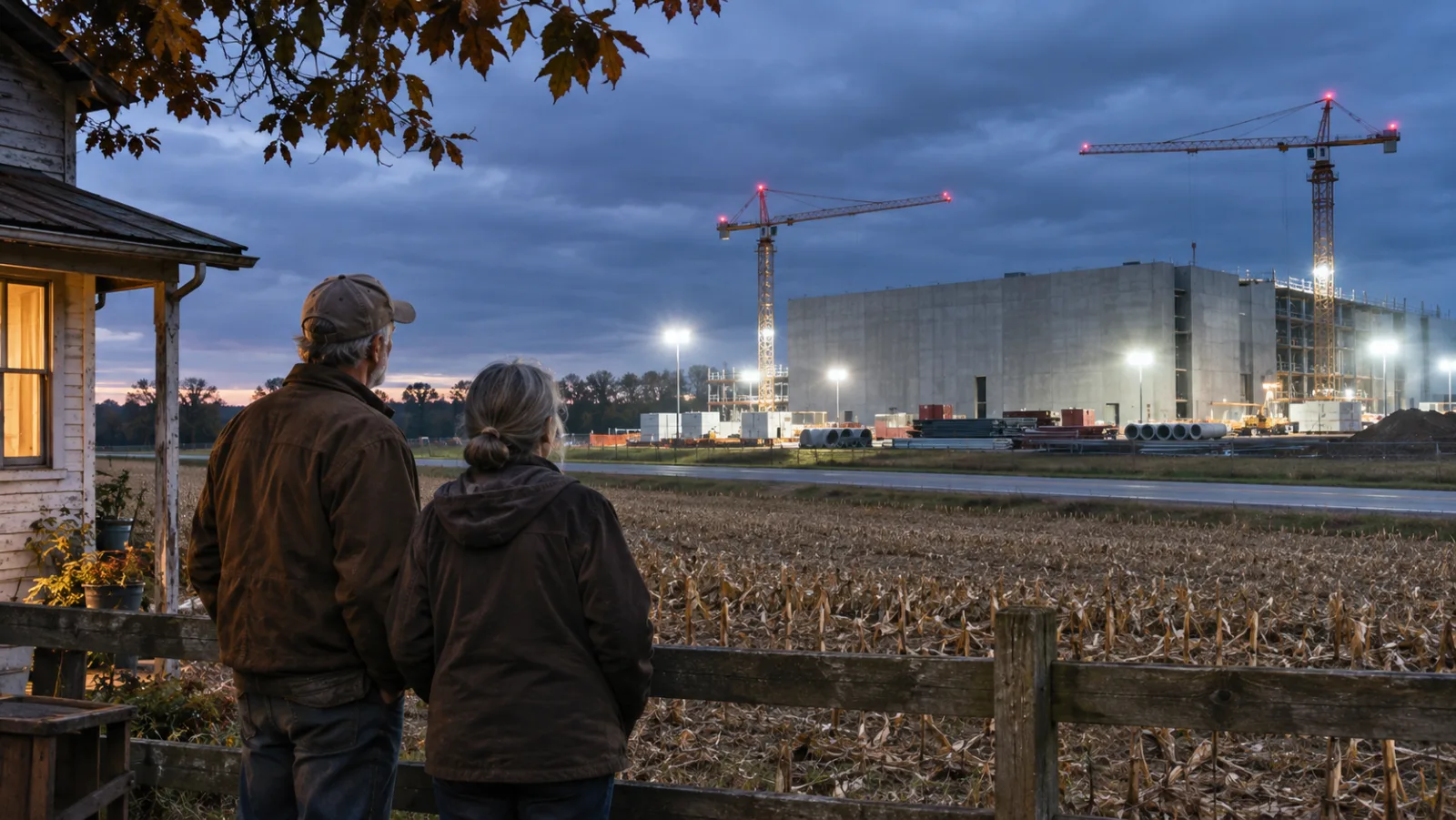
If an AI data center wants to build near your home, would you vote for or against it?
AI is becoming increasingly practical and convenient, yet concerns over privacy and local living environments are closing in. Are you ready to face these challenges?
OpenAI has released ChatGPT Images 2.6, which can directly create GIF animations and save reference images for repeated use.
Starting with iOS 27.3, Apple will check the content shared via iCloud links that are accessible to anyone with the link.
At least 14 towns in Ohio voted to restrict or ban AI data centers during recent elections.
Today’s three key AI news stories come from three angles: creative tools, cloud privacy, and local living. Together, they highlight how AI is becoming part of daily life—and with it come tangible costs and new rules.
1. ChatGPT Images 2.6 Enables GIF Creation: What Can Everyday Users Do?
What’s new?
TestingCatalog reports that on November 5 (US time), OpenAI launched ChatGPT Images 2.6, adding two major features: GIF animations and image references.
OpenAI says generated images are now 50% faster, and its products produce 4 billion images weekly.
What can the GIF feature do?
According to TestingCatalog, you can turn characters, mascots, product photos, hand-drawn sketches, reaction expressions, or storyboards into short looping animations.
For example, a small business owner can make product photos rotate in GIFs for display, teachers can animate step-by-step illustrations, and anyone can create personalized reaction stickers.
What is an "image reference"?
You can save photos of yourself, pets, or certain characters as reference images to reuse directly in future generations without re-uploading each time.
TestingCatalog quotes OpenAI: “Save once, create forever.”
This is especially useful if you want consistent appearances for the same character or product across images.
Who can use this? Is there a fee?
TestingCatalog reports Images 2.6 is rolling out worldwide to all paid plans of ChatGPT and Codex, available on desktop, mobile, and web platforms.
The report does not clarify whether free users can access it—check your own ChatGPT interface for details.
What to watch out for when creating AI images?
Saving photos of yourself or family as reference images means these images are stored long-term on AI services. Think carefully before uploading.
If you plan to use AI-generated images commercially, such as in product pages or ads, be mindful of copyright and platform rules. See SasaDaily’s article Can AI-generated images be used directly for commercial purposes?
Sources:
2. Apple to Inspect iCloud Public Links: Will Your Photos Be Viewed?
What has Apple changed?
9to5Mac reports Apple published a new support document stating that starting from iOS 27.3 and corresponding macOS 27.3, iPadOS, and visionOS releases:
Items shared via “anyone with the link” links on iCloud will be inspected by Apple for harmful content.
The first iOS 27.3 beta was released the week of November 4 (US time).
What content will be checked?
Per 9to5Mac, this applies only to public links accessible by anyone with the link, such as iCloud photos and iCloud Drive files.
The report does not mention whether content shared privately with specific people will be inspected. You can’t assume private files are checked, nor can you assume they won’t be.
What counts as “harmful content”?
That remains unclear.
9to5Mac notes Apple’s support document does not define “harmful content” nor explain how it will be detected.
What happens if content is deemed harmful?
According to the support document cited by 9to5Mac, Apple reserves the right to:
- Move, reject, modify, remove, or delete content at any time.
- Disable or block the Apple account of those uploading harmful content.
- Block new accounts registered with the same email or phone number.
- Report content to law enforcement when necessary.
What should the average user take away?
Platforms usually inspect public sharing to prevent illegal or harmful material from spreading widely.
But without clear definitions, standards may seem uncertain or prone to mistakes.
A practical approach: Don’t use “anyone with the link” sharing for files that don’t need to be public. Instead, share only with specific people.
This update is a good opportunity to review existing public links you’ve shared and close any no longer needed.
Sources:
3. Fourteen Ohio Towns Vote to Block Data Centers: Why Residents Don’t Want AI Built Nearby
What happened?
Fortune reports that in the November 3 midterm elections, 18 Ohio towns voted on 21 proposals related to data centers—more than half of all similar ballots nationwide.
At least 14 towns passed bans or restrictions.
Data centers are large buildings filled with servers where AI training and computation occur, requiring vast power consumption.
What exactly was blocked?
According to Fortune and StockAnalysis:
- Most bans target large data centers consuming over 25 million watts.
- Trenton passed a ban about 80% to 20%, potentially impacting a planned large data center park nearby.
- Sunbury’s ban targets a possible large Amazon project, though its future is uncertain.
- Wilmington voters (about 80%) rejected rezoning land for industrial use intended for data centers.
- Ashville voters (about 82%) chose to revoke an agreement with data center operators, but construction has begun and the vote might not stop the project, per NBC4 local reports quoted by StockAnalysis.
Both sources remind readers these results are unofficial pending county certification, and some local outcomes are still pending.
Why are residents opposing this?
Fortune cites an October poll of 1,650 Ohio adults:
- 55% oppose building data centers; 22% support them.
- 65% oppose tax breaks for data centers.
- Primary concerns are environmental impacts, quality of life, then economic issues.
University of Michigan’s Ben Green told Fortune opposition crosses party lines and mainly stems from lack of transparency and community involvement.
How has the industry responded?
Fortune reports that the pro-AI political group Build American AI spent at least $2.54 million on TV ads in Ohio promoting data center investments and jobs.
The report includes no direct statements from data center operators themselves.
What does this mean for Taiwan?
As AI spreads, demand for data centers—and thus energy and land—increases.
Taiwan faces similar pressures. This Ohio vote demonstrates that community consent is becoming crucial to whether AI infrastructure gets built.
It doesn’t guarantee projects will be blocked, but “where to build and who bears the costs” will increasingly be debated. SasaDaily has previously covered AI data centers’ carbon emissions.
Sources:
- Fortune: Ohioans overwhelmingly oppose data centers. 21 ballot measures just put their ire to the test
- StockAnalysis: Ohio votes to ban or limit data centers in at least 14 towns
4. Why These Three Stories Matter Together
One story is about image generation tools, another about cloud sharing, and the third about local voting—seemingly unrelated topics.
But they all point to the same truth:
AI’s benefits are concrete—and so are its costs.
- GIF creation and reference images are convenient, but your photos remain stored long term on AI servers.
- Public sharing is easy, but platforms inspect content by unclear standards.
- AI services are handy, but the data centers powering them get built next to people’s homes.
To enjoy convenience, you need to understand who ultimately bears the costs.
5. What Should Everyday Users Watch for Today?
If you want to use ChatGPT for GIFs or reference images:
Try with less sensitive photos like products, illustrations, or pets first.
Think carefully before uploading photos of yourself or family members.
If you often share files via iCloud:
Open the Photos or Files app to review items shared as “anyone with the link.”
Switch those not meant to be public to sharing only with specific people or stop sharing altogether.
If you care about AI’s environmental and community impact:
When you see promotions highlighting AI investments and jobs, also ask: Where does the energy come from? Whose land is it? Were residents consulted?
Today’s Key Takeaway
The more convenient AI becomes, the more important it is to understand who pays the price.